Showing posts with label Yule. Show all posts

27.12.13

Rutabaga Casserole ‒ Räätikkäloora

Somehow I've managed to forget posting one of the four classic casseroles of the Finnish Christmas table. The others are of course carrot casserole, potato casserole and liver or in my case, raisin casserole. As a replacement of some sort I have remembered rutabaga cubes in syrup though. Nothing wrong with that, but here's the true classic, too. While potato and carrot only became common relatively recently, rutabaga is something you might call original part of the standing table, after all.

- 1 kg rutabaga
- 2 dl oat cream
- 1 tbsp dark syrup
- cinnamon
- clove
- allspice
- breadcrumbs and margarine to top with

Peel and cube the rutabagas. Steam them soft. Mash smooth and mix together with the cream and the spices. Spread in a casserole and finalize by sprinkling breadcrumbs and margarine pieces. Bake for an hour in a 175°C oven.

Nutritional values / 1283 g:
energy 849 kcal
fat 45 g
protein 16 g
carbohydrates 96 g
fiber 21 g

25.12.13

Yule Stars ‒ Joulutortut


Yule stars or Christmas tarts are one of those things every Finn gets fed up during December. I tried to search the origin of them, but it turned out surprisingly difficult. Some writers say they originated in England which is funny because I haven't heard these would be known outside Finland. I assume we're talking about some tarts resembling them but not exactly like them. The first written recipe we know is by a Swedish cook Cajsa Warg in her book Hjelpreda i hushållningen för unga fruentimber, printed in 1755, but for my knowledge, Swedes of today don't know them either. Anyway, judging from the ingredients alone, these are probably one of those things that became popular in the 19th century among noblemen and which regular folk just couldn't even dream to afford.

This year there was a small public outrage when the public broadcasting company of Sweden (the country which Finns have a very complicated love-hate relationship with) claimed them swastikas. Nothing wrong with Sun symbols during the biggest Sun festive of course, but unfortunately it was more like Nazi symbols. This of course assured their popularity among younger Finns with a bad sense of humour like me. In our this years solstice bring-dish party there was little else than Yule starts to eat.

At least that gave me a change to compare self-made tarts and those with store-bought dough. The store-bought ones win in flakiness and fluffiness but of course, lose miserably in taste category. Making the dough yourself does take a little work though, so it's understandable why modern Finns most often cut corners here. The key words to success are coldness and layers. My personal secret ingredient is booze which boils away in the oven, leaving things crunchier than plain old water. It's not essential but if you don't want the extra taste, you can use good quality, odorless vodka.

- 1 l wheat flour
- 500 g margarine
- about 2 dl cold water
(- 2 tbsp brandy or vodka)

- 300 g plum jam (or apple marmalade)

Measure the flour into a large bowl. Place the margarine on it, cold. Start chopping the margarine with a knife until the pieces are about the size of a pea. Drizzle the brandy on the crumble as well as about 1 dl of cold water. Mix with a spatula. Keep adding water a spoonful at a time until you manage to get it mixed. Even quickly by hand and move the resulting clump into a cold place for half an hour.

Place the dough on parchment paper. Roll it flat and thin. Fold one third from the left on the centre and one third from the right on the centre. You should now have a three-layered dough. Turn it 45 degrees an roll again. Repeat this process a few times. Move into a cold place for half an hour.

Now roll the dough one more time and cut into squares. If you're going for the traditional star shape, make cuts from all corners towards the middle. Portion a good spoonful of jam on the middle. Fold the left side of each corner in the middle. Press a little so they won't open up in the oven. If you're afraid your so-called friends will mistake you for a neonazi, try a flower shape instead. I got three baking shields or 27 stars from this amount.

Bake in 225 °C until the edges start to acquire some colour ‒ that's about ten minutes. For a "snowy" effect, dust with powdered sugar.

Nutritional values / 1 star / 50 g:
energy 203 kcal
fat 14 g
protein 3 g
carbohydrates 16 g
fiber 1 g

17.12.13

Beet Temptation ‒ Punajuurikiusaus

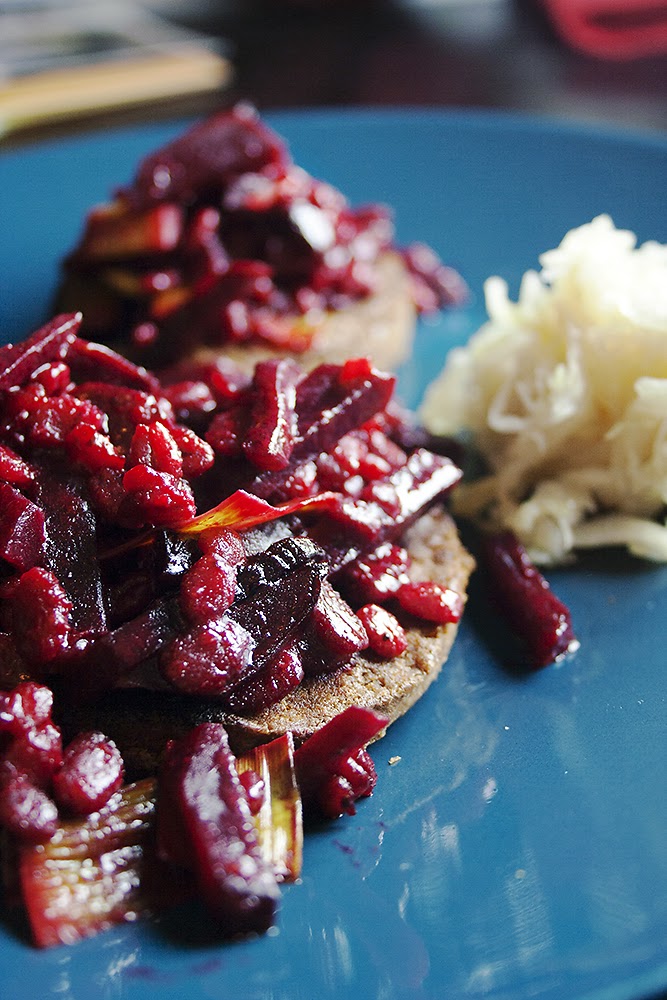
I've talked before about the wonderful casserole type of dish called temptations.They usually involve potatoes cut into strips but it being December and all, this time I wanted to use beets. Their colour is so wonderfully dark and Christmassy, though this is still quite an everyday dish.

This makes a creamy and fruity accompaniment for a more humble main course.

- 1 kg beetroot
- 4 dl oat cream
- 1 leek
- 1 dl barley
- 1 chili (I personally think habanero gives a nice fruity aroma. But if hotness isn't your thing, try a winter apple instead.)
- thyme
- green pepper
- bread crumbs and margarine to top with

Peel and julienne the beets. Cut the leek and chili too. Mix all the ingredients in a casserole. Bake for half an hour in a 175°C oven.

Mix things a bit with a spoon. Sprinkle bread crumbs on the casserole. Top with a few margarine pieces. Bake for another half an hour.

Nutritional values / 1765 g:
energy 1297 kcal
fat 54 g
protein 30 g
carbohydrates 169 g
fiber 45 g

12.12.13

Yule Log ‒ Jouluhalko


On the Finnish Independence Day the president invites war veterans, the parliament and commendable citizens from many areas of life to his palace in the centre of Helsinki. The occasion is televised and people often gather together with their friends to watch how the guest come in certain order to shake hands with the president and president's wife or husband. We try to guess who they are, review their clothing and play silly drinking games. Later, when the dancing begins, we tend to forget they exist and just spend some good time together.

Except not this year. This year the reception was held in Tampere, half a kilometer from my home. And the biggest news wasn't who wore the most revealing dress but the other gathering outside. Some have called it a full-scale riot while others claim it a demonstration where couple of drunkards just happened to hang along. I almost feel sorry I never went out to see myself what really happened. But then again, we were too busy eating the yule log my spouse baked.

Yule log is essentially a Swiss roll made to resemble a piece of wood which was traditionally burned during the celebration. The tradition derives from Germanic paganism, just like Christmas tree. They are rarely seen in Finland though I think it would be a rather great dessert for the traditional standing table. After all, Finns are forest people like ewoks. In our mythology, the Yule is all about how the Great Oak grows huge enough to cover the Sun during the winter solstice and how the light returns after the tree is cut down.

Swiss roll is one of my spouse's kitchen specialities, but we've never managed to prepare a satisfying vegan one. Every time I've seen pictures of pretty and perfectly rolled vegan Swiss rolls, the recipes seem way too complicated and feature ingredients I've never even heard of. So when I found Saara Törmä's perfect looking log with the weirdest ingredient being banana, my spouse wanted to make it right away. The only change he made was switching the filling and the frosting. Now this definitely the holy grail we've been looking for. Next time it might be interesting to try if the banana could be replaced with berries or mämmi.

The cake:
- 2 dl wheat flour
 - 1.5 bananas
- 1 dl sugar
- 0.5 dl oil
- 0.5 dl vegetable milk
- 0.5 dl potato flour
- 2 tbsp coffee
- 2 tsp vanilla sugar
- 1 tsp baking powder
- a hint of salt

The filling:
- 125 g margarine
- 100 g dark chocolate
- 2 dl vegetable milk
- 1 dl icing sugar
- 1.5 tbsp potato flour
- 2 tsp vanilla sugar

The frosting:
- 175 g margarine
- 1.5 dl icing sugar
- 2 tbsp cocoa powder
- 1 tbsp rum or brandy
- 1 tbsp strong coffee

First, the filling. Mix the icing sugar and the potato flour in a pot. Whisk in the milk. Heat up carefully, whisking all the time, until the mixture thickens. Remove from heat and add the vanilla sugar. After the milk kissel has cooled down, whisk the margarine until it's fluffy and add it to the mixture in small amounts. Melt down the chocolate (bain-marie is probably the easiest method), see it's not too hot, and add into the filling in small amounts. Move into the fridge.

Next, the frosting. Whip up the margarine like you did before. Add the rest of the ingredients and smooth down. Leave in room temperature.

Finally, the cake itself. Mash the bananas. Mix together with the sugar, the oil and the milk. In a different bowl, mix the dry ingredients too. Combine the two and mix well. Spread evenly on a parchment-lined baking sheet. Bake for ten minutes in a 225°C oven. Cover with another parchment paper and then another baking sheet. This should help you to flip the cake over. Detach the paper but don't remove it. Roll the cake loosely, careful not to break it.

After the cake has cooled down, we get to arrange the pieces together. Open the cake and moisten with coffee. Spread the filling evenly. Roll the cake back into a bar again (with the help of the paper under it). Move into the fridge.

When the roll has settled down, move it on a clean parchment paper. See that the frosting is still smooth. Spread it on the log. Roll into the paper and move in a cold place. Take into room temperature about half an hour before serving and remove the paper while it's still easy. Draw lines with a fork on the surface or decorate with crushed nuts if you want to the log look woodier.

Nutritional values / 1349 g (if you really want to know):
energy 4768 kcal
fat 297 g
protein 41 g
carbohydrates 473 g
fiber 12 g

19.9.13

Creamy Plum Sauce ‒ Kermainen luumukastike


About a year ago when I had a big bag of freshly picked plums I tried them in a bit of everything. Jams, liqueur, pies and other desserts, as such... One of the best ideas was a sauce I threw together on a spot. Can't remember what an earth I put into it but today I thought I'd try something similar. After licking the plate my spouse announced this just became one of his favourite dishes, which sounded like an indication of me needing to prepare it again. So perhaps this time I ought to write it down.

The important part of this sauce are those small and very, very sour plums. If you can only find sweet ones, try with some other fuits or bring in something else to add sourness and remove the syrup respectively.

- 9 plums
- 4 dl oat cream
- 1 red onion
- 3 garlic cloves
- 1 chili pepper
- 2 tbsp soy sauce
- 1 tbsp rape oil
- 1 tbsp dark syrup
- green pepper
- smoked paprika
- cinnamon

Chop the onion and sauté in oil. When it's turned transparent, add the cream. Remove the stones from the plums, cut smaller if needed and add them into the pot. Spice. Cook with mild heat until the plums have fallen apart and the consistency of the sauce seems nice. Remember to stir.

Serve as the perfecting element of a savory dinner.

Nutritional values / 942 g:
energy 845 kcal
fat 54 g
protein 12 g
carbohydrates 75 g
fiber 11 g

15.1.11

Stuffed Holiday Roast with Cranberry Glaze ‒ Täytetty juhlapaisti karpalokuorrutteella

Yule ended last Thursday with Talvennapa, "the navel of the winter". It's said to be the coldest day of the year. The Great Oak is symbolically cut down from covering the Sun so it gets to shine and daytime starts to grow longer again. Most people celebrating the day choose a weekend instead of the "official" day when there's more time to relax.

This roast should be a perfect centerpiece for any feast table. I took the inspiration from Vegan Dad's seitan roast and tofu glaze. The latter one especially turned out excellent. The stuffing portions need some adjusting as I got quite a lot of leftovers. But don't worry, you can eat them while waiting for the roast to cook.

- 1 dough for seitan roast

Stuffing:
- 1 dl barley
- 1 dl pine nuts
- 1 dl horse beans
- 1 dl grinded celeriac
- 1 dl frozen cranberries
- 0.5 dl roasted onion
- 1 tablespoon margarine
- 1 tablespoon wheat flour
- green pepper
- salvia
- thyme
- herb salt

Glazing:
- 2 dl frozen cranberries
- 1 dl water
- 0.5 dl dark sugar
- 1 tablespoon vinegar
- cinnamon
- allspice

Roast the nuts if you wish. Cook the barley and the beans. Mix all the stuffing ingredients together. While it's cooling down, prepare the seitan part.

Roll out the seitan dough into a thin rectangle. Spread the stuffing in the centre lengthwise. Make sure it's firm. Roll the seitan tightly so the edges will touch each other. Seal the roast and wrap inside a tin foil. Roast for an hour in 175°C oven.

In the meanwhile, prepare the glaze. In a saucepan, cook the cranberries with the water until they're soft. Blend smooth. Stir in all the other ingredients. Refrigerate. When the roast comes out of the oven, let it cool down as well. Then move the roast into a casserole and cover all over with the glaze. Bake 10-15 minutes more.

Enjoy hot or cold!

Nutritional values / 1680 g:
energy 3318 kcal
fat 121 g
protein 242 g
carbohydrates 321 g
fiber 56 g

2.1.11

Carrot Casserole ‒ Porkkanalaatikko

A year ago I posted two of the four essential casseroles of Finnish Yule table: potato and raisin. This time I thought I'd continue with the carrot version. Like so many traditional dishes, this is most often made with rice which at some point was though fancier than home-grown grains, mostly barley. Some like it plain carrot, without any grains. As a halfway solution I use just enough semolina to keep it nicely together.

- 1 kg carrots
- 1.5 dl oat cream
- 2 tbsp dark syrup
- 1 dl semolina
- 1 tsp salt
- 1 tsp ginger
- 0.5 tsp nutmeg
- breadcrumbs and margarine

Peel, cook in small amount of water and puré the carrots. Save 1 dl of the broth you used for cooking. Add it as well as all the other ingredients with the carrot mash. Butter a casserole (or six oven-proof coffee mugs as I did) and pour the carrot mixture in it. Top with breadcrumbs and margarine pieces. Put into a 175°C oven for an hour.

Nutritional values / 1300 g:
energy 993 kcal
fat 30 g
protein 19 g
carbohydrates 158 g
fiber 32 g

1.1.11

Tofu and Nut Loaf ‒ Tofu-pähkinämureke

Have a happy year 2011! I guess most Finns were shooting fireworks and throwing wild parties last night but to be quite honest, I've never really understood the fuss over a changing number or why Gregorian calendar even places the New Year to the middle of winter in the first place. After all, I already cast my new year tin during Kekri. So yesterday evening we just took a nap after an exhaustive work week, ate a nice meal, drunk some cider and watched a surprisingly boring movie about the French revolution.

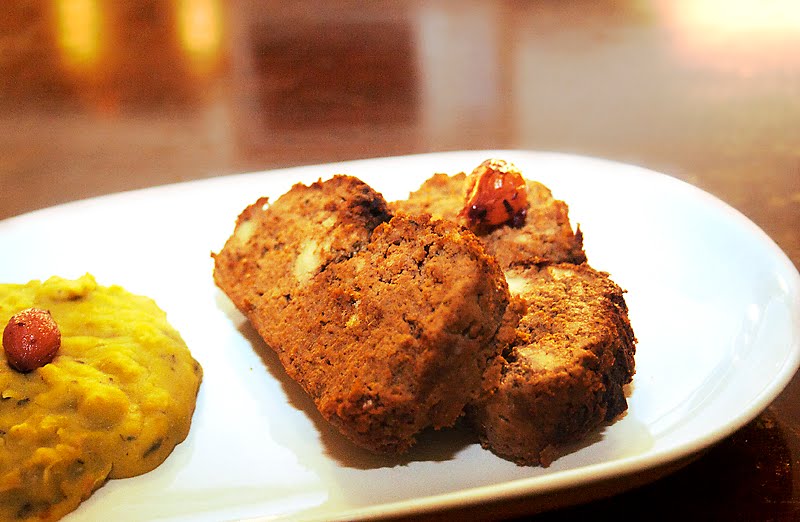
Anyway, here's a loaf recipe on the fancier side for such occasions. I've originally taken it from the Finnish animal rights forum and usually prepare it for the Yule table as the poster suggests (among my non-traditional food traditons). It's quite salty, because it's meant to be eaten together with several other standing table dishes (and fits excellently on toasted bread on the next morning). If you'd rather have it as the star of the table, you may want to replace some of the soy sauce with plain water or saltless vegetable stock.

- 75 g hazelnuts
- 90 g almonds
- 165 g cashew nuts
- 540 g firm tofu (I like it best smoked but plain goes just fine)
- 4 toasted white bread slices
- 1 punch of fresh parsley
- 1 small punch of fresh salvia
- 1 dl soy sauce
- 2 tablespoons Dijon mustard
- 1 teaspoon paprika
- basil
- thyme
- black pepper

Add the ingredients into a mixer one by one. Keep mixing until you have a paste. Butter a casserole or and spread evenly into it. Garnish with bread crumbs if you wish and make some wrinkles with your fingers. Bake in 175°C for about an hour or until beautifully brownish.

Nutritional values / 1200 g:
energy 3152 kcal
fat 224 g
protein 177 g
carbohydrates 115 g
fiber 37 g

27.12.10

Rye Gingerbread ‒ Ruispiparit

I made a small batch of gingerbread cookies this year as well. I used half of my last year's
gingerbread recipe but replaced the wheat flour with sifted rye flour. There wasn't much difference in outlooks or taste really. Perhaps the structure seemed a bit crunchier or maybe I just hoped so. I think regular, unsifted rye flour would make even a better option.

Remember kids, anything with rye in it is health food!

24.12.10

Return of the Weird Glögis ‒ Outojen glögien paluu

Exceptionally, this Yule I don't plan to travel around the country but stay home and be lazy. I started it early on 21. with a friend of mine (since he didn't remember Winter Solstice was 22. this year) by raising a pint of Hyvä Tuomas for the rising Sun on the ice of the lake Näsijärvi. We didn't actually see the star of the 5-hour day at all since it was so cloudy but seeing that neverending white horizon I felt sorry I didn't bring my camera. Well, my fingers were all frozen already so maybe it was for the better.

Since I'm defintely not going to do anything useful during these few days the Sun rests on the shoulders of the Great Oak (in Finnish mythology they're called Pesäpäivät, "nest days") I could finally do things I've wanted to do quite a long time: read some novels, install Ubuntu and update this blog for a change. These hot drinks are from the pikkujoulu party me and my friends had. As you may remember, we did the same last year. (If the word "glögi" is all Creek to you, read this post first.) Everyone got to bring one recipe (I did the sea buckthorn version). I've made some minor alterations to them, for example by removing extra sugar if it seemed way too sweet. But feel free to adjust them according to your own taste.

Apple Tea Glögi

- 1 l water
- 2 dl apple juice
- 6 teaspoons of your favourite tea
- 4 tablespoons fariinisokeri or muscovado
- 2 tablespoons glögi spices (cinnamon, clove and ginger)
(- mint liqueur)

Prepare the tea. Remove the tea leaves. Add the other ingredients and let the mixture simmer for another ten minutes. Pour in cups and let everyone add mint liqueur as much as they please.

Black Currant Glögi with Mandarine

- 1 l apple juice
- 2 dl black currant juice (without added water)
- 1 cinnamon stick
- 5 cloves
- 0.5 dl sugar
- 1 dl raisins
- 200 g preserved mandarine slices
(- vodka)

Put the juices, the sugar and the spices into a pot and let them simmer for five minutes. Pour the liquid part into cups. Finish off with the raisins, the mandarines and the vodka.

Pirate Glögi

- 8 dl pineapple juice
- 4 dl orange juice
- 2 dl water
- 2 dl dark rum
- 2 tablespoons fresh ginger, chopped

Cook the ginger in the water for about ten minutes. Add both the juices. Heat the whole thing up but don't boil. Portion the rum into four glasses and pour the mixture on it. Decorate with small Pirate Party flags.

Sea Buckthorn Glögi

- 1 l unfiltered apple juice
- 2 dl sea buckthorn juice
- 1 cinnamon stick
- 2 star anises
- 1 piece of ginger
(- sugar)

Let the apple juice simmer together with spices for about an hour. Mix with the sea buckthorn juice only a moment before serving. Add sugar if you wish. I don't recommend alcohol with this since we noticed a surprising effect: half the taste seemed to disappear somewhere after adding only a sip of vodka.

11.12.10

Red Cabbage Salad ‒ Punakaalisalaatti

Tonight we'll be having our own traditional pikkujoulu party with a group of friends, just like we did last year. The idea of trying weird glögis turned out so well last time we thought we'd repeat it with some fresh recipes. I've also baked a chocolate cake for the occasion but I haven't tasted yet in which way is it to die for.

While waiting for the dessert, here's an extremely simple sidekick salad. It takes practically no time to prepare so it's just what you need when noticing your Joulu table is still missing something fresh. Cabbage and lingonberry are quite a regular combination in Finnish kitchen but somehow the nuts give it that special festive feeling.

- 500 g red cabbage
- 3 dl walnuts
- 2 dl lingonberry cram (with only a hint of sugar)

Shred the cabbage. Combine everything. Say: "Hyvää ruokahalua!"

For hi-fi version, toast the nuts. Depending on what else you're having on the plate you could also add couple of tablespoons of (nut) oil and some fennel seeds.

Nutritional values / 815 g:
energy 1401 kcal
fat 119 g
protein 35 g
carbohydrates 47 g
fiber 41 g

25.12.09

Barley and Raisin Casserole ‒ Ohra-rusinalaatikko

Happy Yule! The Sun has born again! You can clearly see how the day is now longer again... Well, at least if you use a lot of imagination.

One of the four classic casseroles of the Finnish Yule table is liver casserole. That's something bound to divide opinions even amongst meat eaters. Some get repulsed by the sheer idea of eating organs while I remember loving it as a child. One person I know even explained she's a vegetarian most of the time but has this perversion (that's the term she used herself) of eating a whole liver casserole once a year.

Making a vegan version without that dreaded body part isn't complicated at all but it's much harder to make up the name. Yeast is what gives a special flavour into this but using it in the name has the same problem as its predecessor: doesn't sound too appealing, no matter how quickly the stuff tends to vanish at our home. So instead I named this after the other distinctive ingredient, raisin though I think I could try some dried berries next year instead. Feel free to suggest a better title.

The original version of this was posted here.

- 2 dl barley grains
- 2 dl soy crumbles (TSP)
- 0.5 dl soy sauce
- 1 red onion
- 1 dl raisins
- 2 dl oat cream
- 2 tablespoons dark syrup
- 1 teaspoon white pepper
- 1 teaspoon marjoram
- 100 g yeast paté (for example Tartex or Marmite)
- 2 tablespoons margarine

Soak the raisins in water. Cook the barley. Chop the onion and sauté together with the soy crumbles and soy sauce. Mix all the ingredients in a buttered casserole. Top with margarine pieces. Bake 45 minutes in a 175°C oven. Enjoy with lingonberry cram.

Nutritional values / 800 g:
energy 1613 kcal
fat 73 g
protein 55 g
carbohydrates 180 g
fiber 37 g

23.12.09

Tuuvinki

There are four standars casseroles in the standing Finnish Yule table: carrot, rutabaga, liver and potato. The idea is to take just couple of spoonfuls of each so they'll form a colourful medley of tastes. They're designed to get better and better when rewarmed again and again during those magical days of night.

My definite favourite of these is the potato version tuuvinki that is sweetened naturally. Some people just use dark syrup or sweet potato instead of waiting but I call that cheating.

- 1 kg potatoes (floury variety)
- 4 dl oat milk
- 2 tablespoons wheat flour
- 2 teaspoons salt
- 2 tablespoons margarine

Cook and mash the potatoes. Add the wheat flour (as well as some water if the potatoes seem dry) and pour the mashed potatoes into a casserole. Leave to sweeten in a warm place for a night. If you don't have one set your oven to the lowest temperature possible and keep the mash there for a few hours.

Taste. If the potatoes haven't sweetened enough on their own (= the place you chose wasn't warm enough) you can pour in a tablespoon of dark syrup at this point. Stir in the other ingredients as well. Top with margarine pieces. Bake 3 hours in a 150°C oven.

Nutritional values / 1451 g (also see Fineli):
energy 1033 kcal
fat 25 g
protein 22 g
carbohydrates 174 g
fiber 20 g

22.12.09

Rosolli

Happy Winter Solstice!
Well, actually that was yesterday but I was celebrating it in Estonia. That's when the holiday starts for me, lasting all the way to Talvennapa (January 13th), supposedly the coldest day of the year. Meanwhile, the Sun is sleeping so we have to light candles instead and feast.

One of those dishes that really make my Joulu is rosolli. Think I could eat a whole bucket of it. Rosolli or sallatti is a simple beetroot salad known in all of northern side of Europe from Netherlands to Russia. The name rosolli comes from Russian rosol, meaning salty. Of course everybody uses a bit different amounts, some leave apple or onion out altogether and some even put salted herring in it. But here's a recipe to start with.

- 4 beetroots
- 3 potatoes
- 3 carrots
- 1 apple
- 1 onion
- 2 pickles

Cook and peel the root vegetables. Cut all the ingredients into cubes. Mix. Serve cold, possibly together with whipped oat cream coloured and spiced with the vinegary pickling juice of beetroots.

Nutritional values / 1350 g:
energy 475 kcal
fat 1 g
protein 13 g
carbohydrates 96 g
fiber 25 g

16.12.09

Yule Bread ‒ Joululimppu

As I've mentioned earlier, here in western Finland soft bread or limppu used to be eaten only couple of times a year. One such important holiday was ‒ and still is ‒ Joulu or Yule. My idea of a proper joululimppu involves black skin, softness, sweetness and a lot of spices. Such taste needs some time to evolve.

My inspirations for this creation come mainly from mustaleipä ("black bread") of Åland islands and fairer looking but spicier joululimppu recipes. I also thought about throwing in some dried cranberries or nuts but totally forgot. Well, it's not like this would exactly need them. Ideally the bread should be baked couple of days before the actual eating but guess if I could keep my hands off for so long.

- 4 dl oat yogurt (or soy yogurt ‒ anything goes as long as it's sour)
- 3 dl rye malts
- 0.5 dl dark syrup
- 1 teaspoon salt
- 3 dl rye flour

- 25 g yeast
- 3 dl wheat bran
- 5 dl dark wheat or spelt flour (This is how much I counted I'd need based on other recipes but it seemed to take quite a lot more. Next time I make this I promise to update the amount.)
- 3 tablespoons rowan jelly (just for the flavour, this can be dropped out if you don't have any)
- 1 teaspoon fennel
- 1 teaspoon anise
- powdered bitter orange peel
- some mixture of dark syrup and coffee for buttering

Mix together the yogurt, the malts, the syrup the salt and 2.25 dl rye flour. Sprinkle rest of the rye flour on the composition and cover with a towel. Leave in a warm place for a day (or two if it seems to bubble lazily).

Dissolve the yeast in a drop of lukewarm water. Add the yeast and the rest of the ingredients into the fizzy drink you made yesterday. Cover with a towel again and let it rise for 6 ‒ 8 hours.

Knead it into a semicircle or an oval. Let your loaf rise under a towel for ten minutes. Bake it 10 minutes in a 200°C oven. Butter with the syrup and coffee mixture. Bake 10 more minutes and rebutter. Wrap the loaf into folio, turn the oven to 150°C and leave the bread in there for three hours. Turn off the oven and take the bread out when the oven has gone cold.

Nutritional values / 1150 g:
energy 2705 kcal
fat 23 g
protein 77 g
carbohydrates 537 g
fiber 64 g

13.12.09

Red Onion Sauce ‒ Punasipulikastike

This quick sauce seems to be on everybody's Christmas dinner list in this animal rights forum. And no wonder. Oat, syrup and red onion form a pleasant, sweet trinity where the spices bring the final kick.

- 2 large red onions
- 4 dl oat cream
- 1 tablespoon rape oil
- 2 teaspoons dark syrup
- 2 teaspoon paprika
- 2 teaspoons milled black pepper
- 2 teaspoons soy sauce
- 1 teaspoon tomato paste
- 1 good punch of fresh parsley

Cut the red onions into semicircles. Sauté in oil. Pour on them everything but the parsley. Let the sauce simmer for 5 ‒ 10 minutes. Remember to stir occasionally. If your sauce looks too thick add water, and if too thin add potato flour.

Chop the parsley and sprinkle on the sauce. Enjoy together with casseroles and other Joulu dishes.

Nutritional values / 4 dl:
energy 862 kcal
fat 54 g
protein 14 g
carbohydrates 80 g
fiber 9 g

5.12.09

The Weirdest Glögis

A punch of friends invited themselves at my place to throw one more pikkujoulu party. We listened to the greatest Christmas songs (like this or this) and tried the weirdest glögi ideas we could find. These are starting to get pretty far from any definition of glögi but what matters most, all turned out surprisingly delicious. Exceptionally, I'll write just one long post about them.

Carrot Glögi ‒ Porkkanaglögi

This one sounded like the most awful one so we started with it. But the drink came out quite yummy and didn't taste healthy at all.

- 1 l carrot juice
- half a lemon
- 1 tablespoon cloves
- 2 dl vodka (the bottle in the photo actually isn't vodka)

Wash and grind the lemon half (don't peel). Put the lemon and the cloves into a kettle together with the juice and let it simmer for a moment. Filter out the bits and pieces. Pour into mugs. Finalize with vodka.

Beer Glögi ‒ Olutglögi

I bought three bottles of Sinebrychoff's excellent porter for this and felt so bad in advance for having to ruin it. But no, this came out good as well though there was a bit too much ginger in relation to cinnamon.

- 1 l porter
- 2 dl water
- 1 piece of fresh ginger
- 5 cinnamon sticks

Peel the ginger piece. Let the ginger and the cinnamon sticks simmer in the water until you've caught their taste. Combine the liquid part with the beer and warm it up. Be careful not to boil the beer since it turns bitter quite easily. Beer glögi is best enjoyed while still hot.

Snowball Glögi ‒ Lumipalloglögi

The last one was the winner. There are quite many flavours in this drink but they all seemed to stand out. Sadly, the snowball itself melted all too fast.

- 1 l soy milk
- 2 dl water
- half vanilla pod
- green tea (I used a variety spiced with fruit pieces)
- spruce syrup
- 2 dl whipped oat cream
- cinnamon
(- brandy to taste)

Let the vanilla and the tea simmer in the water. Add the syrup and the milk and warm up the whole thing. Filter into mugs. Pour in some brandy if you wish. Let your guests crown the drink with a cream snowball and cinnamon.

3.12.09

Gingerbread ‒ Piparit

Warning: Keeping a food blog may cause you to try the weirdest things. Last year my spouse came home from a journey just in time for Yule so I surprised him by decorating gingerbread cookies with obscene symbols and hanging them all around our home. Knowing exactly how good I am with handicrafts I'm pretty sure it wouldn't have even crossed my mind to build a full gingerbread house if I couldn't tell about it here. The artwork in the photo is my third one and it was built together with three friends of mine. If you want to see more traditional examples gather ideas from here.

In different countries, gingerbread can mean all sorts of cakes or biscuits. In Scandinavia it means a dark, thin and crunchy biscuit with a generous amount of spices. They're eaten almost exclusively during Christmas time. Besides houses, they often have a shape of people, pigs, spruces, hearts, stars and bucks. The Finnish name piparkakku comes from Swedish pepparkaka, "pepper cake".

Here's the most basic gingerbread recipe I can think of (combining at least this and this recipe):

- 2 dl dark syrup
- 2 dl sugar
- 1 dl water
- 200 g quality margarine (for example Keiju 70 %)
- 1 l wheat flour (or spelt)
- 1 tablespoon baking soda
- 2 tablespoons cinnamon
- 1 tablespoon clove
- 1 tablespoon cardamom
- 1 tablespoon ginger
- 0.5 tablespoon bitter orange peel

Melt together the sugar, the syrup, the water and the spices. Pour the hot mixture over the margarine. Keep stirring until the margarine has melted as well. Let the mixture cool down a bit and then whip it fluffier. Filter in the flour and the soda in small amounts. Leave the paste in the fridge for overnight. Try not to eat it all.

Next day you can roll the paste out into a thin layer (I recommend sprinkling some flour on the table first). Cut it into merry shapes and put them into a 200°C oven until they've gotten some nice brown colour (10-15 minutes).

If you wish, decorate the cookies with an icing made of water and confectioner's sugar. You can get a pink colour by adding a drop of beetroot juice in the icing or a blue one with bilberry juice.

When building a house you should first draw blueprints (if creating your own architectural design it helps to make a model out of cardboard). Cut the paste into flat shapes you can put together after baking. Don't forget to make a soil from the last lump to build your house on. The pieces will swell in the oven so it may be a good idea to cut the edges a little right after they come from the oven and are still soft. Let them cool down and then decorate. Glue the pieces together (and repair the broken ones) with sugar melted on a non-sticky frying pan. You need to be quick, careful and precise with this phase so a calm, grown-up assistant would certainly help. Finally, turn the collapsing side of the house towards a wall and sprinkle some more confectioner's sugar ("snow") over it to cover the ugliest seams.

Nutritional values / 1500 g:
energy 4990 kcal
fat 156 g
protein 87 g
carbohydrates 802 g
fiber 25 g

25.11.09

Cranberry Glögi with Chili ‒ Chilinen karpaloglögi

Remember when I said there are probably hundreds of glögi variants? Well, now I have this urge to try if not hundreds then at least a dozen of them. Cranberry version is still quite a standard one so I also experimented with the spices.

For once, I admit I may have exaggerated with chili ‒ maybe that challenge I talked about in the last post was still haunting in my mind. It covered most of the other flavours and started to hurt my stomach. (A note to self: remember you shouldn't use chili nearly as much for liquids as you would for the same amount of solid food.) Otherwise however, this seemed to work rather well. The structure came out surprisingly thick so if you prefer your glögi transparent use less berries.

- 200 g frozen cranberries
- 0.5 dl spruce syrup
- 1 dl water
- 1 dl dried cranberries
- dried chili
- aniseed
- cardamom

Cook the cranberries in the water so long they get mashed. Filter out most of the pieces (and use on your breakfast porridge in the next morning). Add the syrup and the spices. Let the glögi simmer for about ten minutes. Pour in the serving glasses and give the final touch with a few dry berries.

Nutritional values / 1 l:
energy 264 g
fat 1 g
protein 1 g
carbohydrates 64 g
fiber 1 g

18.11.09

Glögi

Glögi is a hot drink known all around Scandinavia. Today it's mostly associated to this dark time preceding Joulu. The spices used in it sound rather exotic since the present form originates from the homes of Swedish-speaking upper class that the rest of Finland of course started to copycat as soon as they could afford it. According to Finnish Wikipedia, glögi's predecessors were spiced spirits which were used to warm up mailmen traveling long distances during winter.

Glögi is often confused with mulled wines, especially German Glühwein, but my Germany experts assure me they taste quite different. Glögi is sometimes made of red wine instead of red juice but that's so much rarer that it's usually called wine glögi in those cases. (One reason for this may be the way how alcohol is still considered a big no-no in Finnish culture, something you have to drink in secret in order not to appear a drunkard and definitely not in the town square with your children.) The spices are pretty much the same as in gingerbread (I'll try to post the recipe next month). Glühwein on the other hand is always prepared from wine like the name says, and this may also mean fruit wine made of blueberries or cherries for example. It's typically spiced with cinnamon, vanilla, cloves and most notably, orange.

There are probably hundreds of glögi variants, the best known being white glögi. The spices are the same but it's made of apple juice or white wine.

- 7 dl water
- 1 dl black currant juice (unsweetened and unwatered)
- 0.5 dl dark sugar
- cinnamon
- cloves
- ginger
- 2 dl vodka (or brandy)
- 0.5 dl raisins
- 0.5 dl almond slices

Heat up the water together with the spices. Let them simmer for about ten minutes. Filter out the spices. Add the juice and the vodka. Portion in cups. Finalize by throwing in some raisins and almond slices or let your guests help themselves. Enjoy the hot cup between your frozen fingers.

Nutritional values / 1 l:
energy 962 kcal
fat 19 g
protein 10 g
carbohydrates 70 g
fiber 9 g
Osta neljä tuotetta ja maksat vain kolmesta - Luomutallin kampanjatuotteet näet täältä


Teekauppa.fi - laadukasta teetä netistä
Ostoskorin loppusummasta vähennetään viisi euroa ja toimitus tapahtuu ilman postikuluja.
Syötä ostoskoriin kuponkikoodi:

syysteet

Tilauksen on oltava vähintään 35 eur, mistä jää maksettavaksi 30 eur.
Related Posts Plugin for WordPress, Blogger...