Showing posts with label pies and cakes. Show all posts
13.9.14
Tosca Pie ‒ Toscapiirakka
Random facts about Finnish coffee culture #13: Traditionally, food is respected with silence in Finland. Eating dinner with a Finnish family can still feel a bit awkward for someone coming from a culture of constant small talk. In coffee table however, the atmosphere is more carefree and this is actually a good place to catch up with the latest rumours. In modern business meetings people may even wait until they've all got coffee before starting the actual negotiation part.
I've always found the name tosca weird. Does it refer to Tuscany, though I haven't found any Italian recipe resembling this and it seems more like a cousin of the French classic pie tarte tatin? Or straight to the opera Tosca and its name character Floria Tosca? The recipe could very well be from 1905, the year Tosca was first performed in Finnish National Opera. But there's more to the riddle: tosca seems to be a general name for this sort of caramel topping, and oatmeal is even a more common ingredient than almond flakes. Tosca apples for example are another classic. So the crust here seems like a mere vehicle for the opera treat.
Tosca pie is often prepared with some apples or rhubarb in the crust mix. Since I'm trying to present you gouys classic versions here, I opted to enjoy rhubarb on the side. For a bit more kick though I used aromatic farin sugar in the topping instead of the regular kind. Another addition you can try is adding 2 teaspoons of cardamom to the crust part. This is another one of those whole baking sheet sized pies. If you only want a regular one, half all the ingredient amounts.
The crust:
- 5 dl wheat flour
- 3 dl sugar
- 2 dl whippable soy or oat cream
- 150 g margarine
- 3 tsp baking powder
- 2 tsp vanilla sugar
The topping:
- 200 g almond flakes
- 2 dl farin sugar (or regular)
- 100 g margarine
- 0.5 dl oat or soy milk (or more cream)
- 2 tbsp wheat flour
Beat the crust sugar and the margarine until foamy. Add the cream and continue whipping. Combine the dry ingredients before adding to the mix too. Spread on a baking sheet. Pre-bake for 12 minutes in 200°C.
While the crust is in the oven prepare the topping. Combine all ingredients in a sauce pan. Cook for about ten minutes or until the blend starts to look thick and brownish. Spread on the crust and return to oven for 10-15 more minutes.
Enjoy with coffee and some sour fruits!
Nutritional values / 1450 g:
energy 6107 kcal
fat 332 g
protein 97 g
carbohydrates 680 g
fiber 28 g
Tunnisteet:
apple,
childhood,
coffee table,
pies and cakes,
rhubarb,
sweet,
veganmofo
12.9.14
Spice Cake ‒ Maustekakku
Random facts about Finnish coffee culture #12: Coffee came to Europe through Arabs. Although the biggest producers in the modern world are Brazil and Vietnam, in Finland the association to Arabs is still live and well. Camel caravans are pictured in coffee packets, the most famous cup factory is called Arabia and coffee spiced with cinnamon, cardamom and ginger is labeled Arabian coffee.
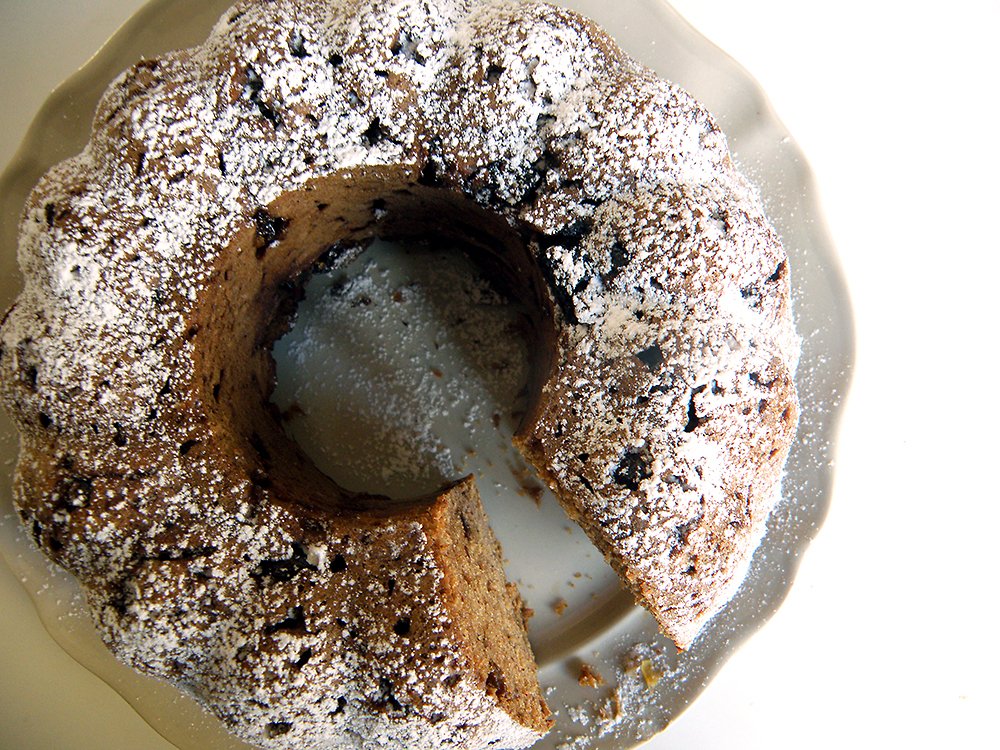
The last one of the four dry cakes I'm posting has several names: spice cake, buttermilk cake, raisin cake or Arabian coffee cake. In the latter case it usually also has an icing featuring margarine, coffee, icing sugar and cinnamon. The spice blend here is very medieval, and foods like that are typically eaten only during December nowadays (as in gingerbread), but somehow this classic has managed to last all year round.
The biggest differences between recipe versions come from that spice blend. The spices themselves stay pretty much the same, but some like to add more cinnamon, some more cardamom and some more clove. I'm used to a bit stronger flavours than most Finns I guess, so my version has a double portion of them all. There are also strong opinions on whether it should include raisins or not. Decide for yourself!
- 4.5 dl wheat flour
- 3 dl oat or soy yogurt
- 100 g margarine
- 1 dl sugar
- 1 dl raisins (optional)
- 2 tsp ground clove
- 2 tsp ground cinnamon
- 2 tsp ground cardamom
- 2 tsp baking soda
Combine dry ingredients, including raisins if you're using them. Melt the margarine. Mix in the melted margarine and yogurt as well. Pour into a ring-shaped cake mold, which you've greased and breadcrumbed. Bake for about an hour in 175°C.
Nutritional values / 840 g:
energy 2903 kcal
fat 85 g
protein 55 g
carbohydrates 328 g
fiber 19 g
Tunnisteet:
childhood,
coffee table,
pies and cakes,
sweet,
veganmofo
11.9.14
Tiger Cake ‒ Tiikerikakku
Random facts about Finnish coffee culture #11: Nowadays stores compete over who sells the cheapest coffee, sometimes even under their own purchase price to get us coffee addicts do all of their shopping in the same place. But in the 80's a packet of coffee was still expensive enough to be a popular present item when going for a visit, and that's still more common than bringing say, a wine bottle.
"I'm taking part in this food blogging challenge this month. And so it wouldn't be too easy I took a theme of Finnish coffee table pastries."
"Finnish pastries? What, like tiger cake?"
"Why yes, I some one on the table actually! Care some?"
The conversation above took place on Sunday evening. Before that I asked another friend if he would happen to have a ring mold he could lend me and he asked: "Oh you mean a tiger cake mold?". I think these stories describes beautifully how plain and ordinary this cake is thought to be among younger Finns. Yet there is usually a good reason why some foods become so iconic in the first place that they practically start to bore us.
Though the recipe is as simple as it can get, this time I almost failed the whole thing. I took some model from another recipe, took it out of the oven way too early, tried to turn it onto a plate and got some hot, still runny batter on my hands. Ouch. Miraculously, most of the cake came out just fine after some more time spent in the oven. So in the following recipe I've given you the total baking time I used, which is in line with the three other dry cakes I'm posting this MoFo.
- 4.5 dl wheat flour
- 200 g margarine
- 3 dl sugar
- 1 dl oat or soy milk
- 1 dl apple or orange juice
- 2 tbsp dark cocoa powder
- 2 tsp vanilla sugar
- 2 tsp baking powder
Melt the margarine. Mix the dry ingredients except for the cocoa powder. Add the liquids into the dry ingredients. Divide the batter in two portions, the other one being slightly bigger. Mix the cocoa with the slightly smaller half
Grease a ring mold and apply breadcrumbs too if you wish. Pour some white batter in the, cocoa batter carefully on it and so on. Try to make the white layer the last. Quite often you see version with just one large cocoa stripe, so that's totally acceptable too. Bake in 175°C for about an hour.
Nutritional values / 970 g:
energy 3468 kcal
fat 152 g
protein 45 g
carbohydrates 476 g
fiber 15 g
Tunnisteet:
childhood,
coffee table,
pies and cakes,
sweet,
veganmofo
10.9.14
Maria Lönnrot's Cake ‒ Maria Lönnrotin kakku
Random facts about Finnish coffee culture #10: During the Swedish govern (and again during the second world war) coffee was on prohibition several times. It was an expensive import product, which was totally unacceptable in the mercantilist ideology of the time, plus it was thought to have negative effects on public health. The smell of forbidden fruit of course only made coffee even more desired and also a profitable target for smugglers. Since Finns aren't easily convinced so they later repeated the prohibition experiment with alcohol and nowadays cannabis, with similar effects.
In the 20th century there were (and still are) a lot of rivaling lemon cake recipes. This one is from Maria Piponius aka. Maria Lönnrot, the wife of Elias lönnrot best known for compiling our national epic Kalevala. The recipe doesn't call for any special veganizing, just adding the word soy in front of cream. Since lemons weren't always readily available, it gives the option of using cardamom instead, but because I'm weird I like adding them both simultaneously. Here is by the way a video of grandma Leena baking this very cake, plus on the same site many other grandams from Finland, Belgium, Netherlands, Italia and Turkey baking their traditional recipes. Yay for grandmas!
Notice the cups here don't mean cups of the English speaking world but Finnish coffee cups of the time. Somewhere between 1,25-1,5 dl is usually a close enough estimation, as long as you stay coherent. As for the soda, I suspect the cream of the time was the sour part of the recipe and vegetable-based cream necessarily isn't, so just to be on the safe side I add some lemon juice as well. The recipe contains well enough sugar to cover that.
- 3 coffee cups whippable soy cream
- 2 coffee cups sugar
- 4 coffee cups wheat flour
- 1 tsp baking soda
- 1 grated lemon rind or 1 tsp cardamom (plus half the lemon juice)
Whisk the cream and the sugar until foamy. Add the rest of the ingredients. Pour into a greased cake mold. (You can sugar the mold after greasing if you wish, but don't use breadcrumbs.) Bake in 175°C for an hour or so. Turn out onto a plate when hot.
Enjoy the aromatic creaminess with coffee and good company.
Nutritional values / 1145 g:
energy 3512 kcal
fat 99 g
protein 54 g
carbohydrates 593 g
fiber 17 g
Tunnisteet:
coffee table,
pies and cakes,
sweet,
veganmofo
9.9.14
Devil's Cake ‒ Paholaisenkakku
Random facts about Finnish coffee culture #9: Usually, there are two rounds of coffee. The second serving is characterized with the same modesty than going to the table (see fact #2). The guest may try to deter when the hostess comes to pour the second cup. The hostess then persuades the guest who perhaps tries to further present reasons not to until he or she agrees to have a half cup. The hostess then pours a full cup. In case your tummy really can't take the second, it's better you choose to have tea to begin with.
Couple of last day's posting have contained cocoa, so it's time to give you the ultimate in that regard. Devil's is sometimes also referred to as cake of a broken heart. Perhaps the name comos from the blackness, or the fact how chocolate has often been redeemed hedonist and sinful.
This is a classic among a cake type called dry cakes, coffee cakes or one-hand cakes because they're so fast and easy you can make them with your left hand only. They were among the earliest thing to be served with coffee, starting from mansions of 17th century. When the coffee drinkin habit became more frequent, the cakes were left out for special occasions.
Most Finns think these are tooo common, which means they aren't on the peak of their popularity at the moment. Now that I tried making a few I was surprised on how easy it was to achieve a great structure. Somehow none of my bakings have been dry like I remembered, on the contrary. They are called dry cakes since they don't usually require any topping, though melted chocolate does fit this one perfectly.
Eggs are a common ingredient, though it's usually pretty safe to just leave them out. They may become more crumbly but since they're crumbly anyways, the difference isn't huge. Here I replaced 2 eggs and 1 dl wheat flour with 1 dl potato starch and 0.5 dl worth of extra milk.
- 200 g margarine
- 4 dl wheat flour
- 3 dl sugar
- 2.5 dl soy milk
- 1.5 dl dark cocoa powder (no, this isn't meant to read tablespoon)
- 1 dl potato starch
- 2 tsp vanilla sugar
- 2 tsp baking soda
- 1 tsp salt
Mix everything even. Pour into a buttered ring mold. Bake in 175°C for about an hour.
Nutritional values / 1110 g:
energy 3774 kcal
fat 164 g
protein 56 g
carbohydrates 508 g
fiber 29 g
Tunnisteet:
coffee table,
pies and cakes,
sweet,
veganmofo
12.12.13
Yule Log ‒ Jouluhalko

On the Finnish Independence Day the president invites war veterans, the parliament and commendable citizens from many areas of life to his palace in the centre of Helsinki. The occasion is televised and people often gather together with their friends to watch how the guest come in certain order to shake hands with the president and president's wife or husband. We try to guess who they are, review their clothing and play silly drinking games. Later, when the dancing begins, we tend to forget they exist and just spend some good time together.
Except not this year. This year the reception was held in Tampere, half a kilometer from my home. And the biggest news wasn't who wore the most revealing dress but the other gathering outside. Some have called it a full-scale riot while others claim it a demonstration where couple of drunkards just happened to hang along. I almost feel sorry I never went out to see myself what really happened. But then again, we were too busy eating the yule log my spouse baked.
Yule log is essentially a Swiss roll made to resemble a piece of wood which was traditionally burned during the celebration. The tradition derives from Germanic paganism, just like Christmas tree. They are rarely seen in Finland though I think it would be a rather great dessert for the traditional standing table. After all, Finns are forest people like ewoks. In our mythology, the Yule is all about how the Great Oak grows huge enough to cover the Sun during the winter solstice and how the light returns after the tree is cut down.
Swiss roll is one of my spouse's kitchen specialities, but we've never managed to prepare a satisfying vegan one. Every time I've seen pictures of pretty and perfectly rolled vegan Swiss rolls, the recipes seem way too complicated and feature ingredients I've never even heard of. So when I found Saara Törmä's perfect looking log with the weirdest ingredient being banana, my spouse wanted to make it right away. The only change he made was switching the filling and the frosting. Now this definitely the holy grail we've been looking for. Next time it might be interesting to try if the banana could be replaced with berries or mämmi.
The cake:
- 2 dl wheat flour
- 1.5 bananas
- 1 dl sugar
- 0.5 dl oil
- 0.5 dl vegetable milk
- 0.5 dl potato flour
- 2 tbsp coffee
- 2 tsp vanilla sugar
- 1 tsp baking powder
- a hint of salt
The filling:
- 125 g margarine
- 100 g dark chocolate
- 2 dl vegetable milk
- 1 dl icing sugar
- 1.5 tbsp potato flour
- 2 tsp vanilla sugar
The frosting:
- 175 g margarine
- 1.5 dl icing sugar
- 2 tbsp cocoa powder
- 1 tbsp rum or brandy
- 1 tbsp strong coffee
First, the filling. Mix the icing sugar and the potato flour in a pot. Whisk in the milk. Heat up carefully, whisking all the time, until the mixture thickens. Remove from heat and add the vanilla sugar. After the milk kissel has cooled down, whisk the margarine until it's fluffy and add it to the mixture in small amounts. Melt down the chocolate (bain-marie is probably the easiest method), see it's not too hot, and add into the filling in small amounts. Move into the fridge.
Next, the frosting. Whip up the margarine like you did before. Add the rest of the ingredients and smooth down. Leave in room temperature.
Finally, the cake itself. Mash the bananas. Mix together with the sugar, the oil and the milk. In a different bowl, mix the dry ingredients too. Combine the two and mix well. Spread evenly on a parchment-lined baking sheet. Bake for ten minutes in a 225°C oven. Cover with another parchment paper and then another baking sheet. This should help you to flip the cake over. Detach the paper but don't remove it. Roll the cake loosely, careful not to break it.
After the cake has cooled down, we get to arrange the pieces together. Open the cake and moisten with coffee. Spread the filling evenly. Roll the cake back into a bar again (with the help of the paper under it). Move into the fridge.
When the roll has settled down, move it on a clean parchment paper. See that the frosting is still smooth. Spread it on the log. Roll into the paper and move in a cold place. Take into room temperature about half an hour before serving and remove the paper while it's still easy. Draw lines with a fork on the surface or decorate with crushed nuts if you want to the log look woodier.
Nutritional values / 1349 g (if you really want to know):
energy 4768 kcal
fat 297 g
protein 41 g
carbohydrates 473 g
fiber 12 g
Tunnisteet:
coffee table,
pies and cakes,
sweet,
Yule
15.8.13
Chocolate Strawberry Cake ‒ Suklaa-mansikkakakku
I just read an interesting article comparing two cup cake recipe books. They both use very similar stock photos but the contents of the actual recipes vary. Apparently the authors (whose names are missing from the cover for oblivious reasons) have. These are both translated books but unfortunately with a quick search I wasn't able to find their original titles or languages. The text of the article is in Finnish but the photos should speak for themselves.
It feels like there's some big step between posting recipes in a blog and making an actual cook book. But quite often, when I somehow hear how those books (not to mention food magazines, which I consider the lowest in this rank) are actually made, I realize most food bloggers actually upkeep higher journalistic standards than people who get paid for it.Of course there are also honourable cook book authors who only publish well-tested recipes. They tend to put their whole personalities in the process. And quite often keep a blog too.
This cake too takes influences from several sources, but I'm more than happy to give them the credit they deserve. I just wanted to use the last strawberries of the summer somewhere so I needed some ideas. Raspberry Blackout Cake by Isa Chandra Moskowitz has become rather famous itself. Satu Saunio of Kamomillan konditoria has made so thorough instructions for different types of layered cakes that I consider it a bible in this matter. Also, I checked how Raisa Kettunen makes layered cakes and frostings in her book Puputyttö ja vohvelisankari (Moreeni 2010), also a book mostly about cupcakes but actually a one I trust is tested and trustworthy. My recipe isn't straight from any of them however, so if something goes terribly wrong, blame me and not them.
The picture I can assure, is taken by myself from the actual product. If the bottom looks a bit thick it's because I took this from the oven too early and it flattened while cooling. My flatmate actually asked if that's a mud cake I've made. Later, I also cut it a bit badly, leaving holes in the lower layer and had to patch them by cutting pieces from the upper layer, but luckily that doesn't show. All in all, I think this is quite a nice cake however, and definitely better than the previous layer cake I tried. This one I can actually recommend, especially the frosting part which manages to be fluffy but also set sturdy in the fridge. It's a pretty small one though, so if you're making it for your parent's silver wedding anniversary or other big occasion, you may want to multiply the ingredients with at least two.
The bottom:
- 3.5 dl wheat flour
- 3.5 dl soy milk
- 3 dl dark sugar
- 100 g margarine
- 1 dl cocoa powder
- 100 g strawberries
- 2 tsp apple wine vinegar
- 1.5 tsp baking soda
- 0.5 tsp salt
The filling and the frosting:
- 2 dl whippable soy cream
- 200 g (dark) chocolate
- about 400 g icing sugar (if you manage to find dark kind, all the tastier)
- 500 g strawberries (+ more for decoration)
Thicken the milk with vinegar. Whisk together the sugar and the margarine. Combine the two. It looks a bit messy at this point but don't worry. Filter in also the flour and the other bottom ingredients, strawberries mashed to give the cake some moisture.
Oil (and bread crumb) your cake tin. Pour the batter in it. Bake for about 50 minutes in 190°C. If you're not sure it's baked yet, try if it still sticks to a toothpick. Let the cake cool down.
Half the bottom with a knife. Mash the strawberries partly, for example with a fork. Spread the mash on the lower part of the cake. Place the upper half on top.
Whip the cream until it's fluffy. Melt the chocolate in a water bath. Combine the two. Now whip in icing sugar until the frosting feels sturdy enough to hold its shape. Pour it over the cake and help it spread across the cake edges evenly. Move into fridge for at least couple of hours. Decorate with strawberries.
Nutritional values / 2373 g:
energy 6017 kcal
fat 189 g
protein 79 g
carbohydrates 985 g
fiber 33 g
It feels like there's some big step between posting recipes in a blog and making an actual cook book. But quite often, when I somehow hear how those books (not to mention food magazines, which I consider the lowest in this rank) are actually made, I realize most food bloggers actually upkeep higher journalistic standards than people who get paid for it.Of course there are also honourable cook book authors who only publish well-tested recipes. They tend to put their whole personalities in the process. And quite often keep a blog too.
This cake too takes influences from several sources, but I'm more than happy to give them the credit they deserve. I just wanted to use the last strawberries of the summer somewhere so I needed some ideas. Raspberry Blackout Cake by Isa Chandra Moskowitz has become rather famous itself. Satu Saunio of Kamomillan konditoria has made so thorough instructions for different types of layered cakes that I consider it a bible in this matter. Also, I checked how Raisa Kettunen makes layered cakes and frostings in her book Puputyttö ja vohvelisankari (Moreeni 2010), also a book mostly about cupcakes but actually a one I trust is tested and trustworthy. My recipe isn't straight from any of them however, so if something goes terribly wrong, blame me and not them.
The picture I can assure, is taken by myself from the actual product. If the bottom looks a bit thick it's because I took this from the oven too early and it flattened while cooling. My flatmate actually asked if that's a mud cake I've made. Later, I also cut it a bit badly, leaving holes in the lower layer and had to patch them by cutting pieces from the upper layer, but luckily that doesn't show. All in all, I think this is quite a nice cake however, and definitely better than the previous layer cake I tried. This one I can actually recommend, especially the frosting part which manages to be fluffy but also set sturdy in the fridge. It's a pretty small one though, so if you're making it for your parent's silver wedding anniversary or other big occasion, you may want to multiply the ingredients with at least two.
The bottom:
- 3.5 dl wheat flour
- 3.5 dl soy milk
- 3 dl dark sugar
- 100 g margarine
- 1 dl cocoa powder
- 100 g strawberries
- 2 tsp apple wine vinegar
- 1.5 tsp baking soda
- 0.5 tsp salt
The filling and the frosting:
- 2 dl whippable soy cream
- 200 g (dark) chocolate
- about 400 g icing sugar (if you manage to find dark kind, all the tastier)
- 500 g strawberries (+ more for decoration)
Thicken the milk with vinegar. Whisk together the sugar and the margarine. Combine the two. It looks a bit messy at this point but don't worry. Filter in also the flour and the other bottom ingredients, strawberries mashed to give the cake some moisture.
Oil (and bread crumb) your cake tin. Pour the batter in it. Bake for about 50 minutes in 190°C. If you're not sure it's baked yet, try if it still sticks to a toothpick. Let the cake cool down.
Half the bottom with a knife. Mash the strawberries partly, for example with a fork. Spread the mash on the lower part of the cake. Place the upper half on top.
Whip the cream until it's fluffy. Melt the chocolate in a water bath. Combine the two. Now whip in icing sugar until the frosting feels sturdy enough to hold its shape. Pour it over the cake and help it spread across the cake edges evenly. Move into fridge for at least couple of hours. Decorate with strawberries.
Nutritional values / 2373 g:
energy 6017 kcal
fat 189 g
protein 79 g
carbohydrates 985 g
fiber 33 g
Tunnisteet:
coffee table,
pies and cakes,
Scandinavian,
strawberries,
sweet
29.5.13
Rhubarb Tart with White Chocolate ‒ Valkosuklaa-raparperipiirakka
I'm now going to post something that probably hundreds of other food bloggers are posting within a week. This is the rhubarb season, and the most classic thing to make from the excess of rhubarbs so many people seem to get from their garden is a tart or pie. Sometimes I wish this wonderfully sour plant would get to be used a bit more creatively, but then again, classics are usually classics for a reason. This year I tried to find some variation to the classic by combining the sourness of rhubarb to the rounded taste of white chocolate, which complements it just wonderfully especially when still a bit melted.
This base fits into many types of pies and tarts so if you want to variate it, try adding cocoa powder or replacing some of the flour with something crunchier like rye flour.
Basic shortcrust pastry:
- 150 g margarine
- 4 dl wheat flour
- 3 tbsp sugar
- 0.5 dl cold water
- 1 tsp baking powder
Filling:
- 5 rhubarb stalks
- 200 g white chocolate (milk-free white chocolates seem to have huge differences so taste before deciding which one to use)
- 5 dl soy yogurt (or oat)
- 3 tbsp sugar
- 1 tbsp vanilla sugar
- mint
Pick the sugar and the margarine together between your fingers. Add the flour, mixed with the baking powder. Keep picking until you have a bowl full of crumby mixture. Knead it together with the water to acquire a paste. Move in the fridge for a while.
While the dough is cooling down, prepare the filling. Chop the rhubarb and sprinkle with vanilla sugar. Either chop the chocolate into flakes with a knife or use a blender. Mix with the yogurt and the sugar. Spice with dried mint.
Spread the dough into your mold. Cover with rhubarb pieces. Cover the rhubarb pieces with the yogurt mixture. The idea here is to leave the rhubarb deliciously sour but place it between two sweet layers.
Bake in a 200°C oven for 45 minutes or until the yogurt has coagulated and perhaps even got some colour. If you want the structure to hold together better, you'll need the patience of an elephant: let it cool down well, perhaps even spend the night in the fridge before serving.
Nutritional values / 1890 g:
energy 3771 kcal
fat 126 g
protein 64 g
carbohydrates 341 g
fiber 25 g
Tunnisteet:
childhood,
coffee table,
pies and cakes,
rhubarb,
sour,
summer,
sweet
12.5.13
Tofu and Nettle Pie ‒ Tofu-nokkospiiras
Your average stinging nettle is very likely the most versatile and nutritious Finnish plant. It grows just about everywhere and is at its best while still young and tender, so if you're planning to fill your freezer with just one foraged plant, this is a great choice. Nettle and spinach are fully replaceable in recipes but nettle doesn't contain oxalate so the taste is milder. This also makes it a great source for iron and calcium. It likes to collect nitrate in itself though, so please don't pick it near nitrogen-rich places such as composts or barns. The stinginess kind of prevents you to use it in salads, but it goes away by blanching, drying or just blending smooth.
This recipe combines a simple quiche-type of crust with Jael's way of making a filling that I've found excellent before and which I should've used back when I made this.
The Filling:
- 2 litres fresh nettle (or 150 g blanched and frozen)
- 2 onions
- 2 tomatoes
- 300 g silken tofu (if you're using regular soft tofu, blend it with a little bit of oil)
- 2 dl oat milk
- 3 tbsp nutritional yeast
- 1 tbsp cornstarch
- oil for frying
- marjoram
- salt
- black pepper
The crust:
- 3.5 dl spelt or wheat flour
- 160 g margarine
- 3 tbsp cold water
- salt
On the previous day, wash the fresh nettles and put them in a water bowl to soak overnight. This way they won't sting when you pick their stalks off and you get to use the water to treat you hair or houseplants. Optionally, you can just use gloves and scissors and bleach them right away by cooking in water for a short period.
Make the crust by combining the ingredients by your hand. Butter you pie plate and spread the dough evenly. It's recommended that you cool down the dough in a refrigerator before using it and then precook the crust for ten minutes without the filling but I don't usually bother.
Chop and sauté the onion. When starting to acquire some colour, add the nettle and cook for a moment more. Blend the tofu, the milk, the nutritional yeast, the cornstarch and the spices together, then mix with the onion and the nettle. Slice the tomatoes and place them on the crust. Then pour the rest of the filling on it and spread.
Cook for about 40 minutes in a 200°C oven. Enjoy warm or cold, as a main course or as a salty snack.
Nutritional values / 1504 g:
energy 2352 kcal
fat 142 g
protein 61 g
carbohydrates 203 g
fiber 31 g
Tunnisteet:
coffee table,
cold dishes,
main courses,
pies and cakes,
spelt,
spinach/nettle,
tofu/hefu
26.7.10
Strawberry Cake ‒ Mansikkatäytekakku
I haven't blogged a total failure for a while so perhaps this was bound to happen. I've been watching how to make basic layered birthday cakes all my life but I've never tried one myself. It turned out much harder than I had thought. Needless to say, I'm no confectioner but perhaps I should just stick to salty dishes altogether.I took the crust recipe from a forum post. It gave 75 minutes for the oven time but after 50 minutes I started to smell something burning. The cake had got scorched only a little but simple moistening didn't really return the softness I had hoped for. After the first bite I also had to check if I had read right the amount of sugar which it seemed to drown all the other tastes, including pineapple weed (pihasaunio) which I have just come to like on its own right and not just as a poor man's camomile.
As if this wasn't enough I couldn't just frost the cake with the standard oat cream you can by from food stores. I tried this topping recipe but apparently wasn't patient enough since it remained all runny and kept bringing down the strawberries on top. At the end I tried fixing the edges with a store-bought soy cream spray I don't really like but didn't have much better luck with it either.
If possible, the whole thing became even more crooked looking as I carried it across the town for a picnic meeting. Miraculously it was edible although not exactly the best cake I have ever tried. Here are the measurements I used. Be careful with them.
The cake:
- 190 g margarine
- 9 dl wheat flour (I mixed graham and white flour)
- 5.25 teaspoons baking powder
- 3.4 dl sugar
- 4.5 dl oat milk (or mineral water)
- 1 tablespoon flowers and leaves of pineapple weeds
- apple juice for moistening (approximately 1 dl)
The frosting:
- 2 dl soy milk
- 75 g margarine (or 50 g coconut butter)
- 2.5 tablespoons potato flour
- 1 tablespoon sugar
- piece of a vanilla pod
- salt (just a pinch)
The filling:
- 500 g strawberries
- 1 tablespoon sugar
- 1 tablespoon flowers and leaves of pineapple weeds
Mince the pineapple weed. Mix the dry ingredients together and shrub together with the margarine. Add the milk, carefully. Pour into a buttered cake mold and put into a 200°C oven for as long as needed (45 minutes?). Let the cake cool down a bit and flip over to a sugared parchment paper.
When the cake has fully cooled down cut it in layers (I only used two layers but if you want three or more you might want to find some other filling to the second layer. Some jam for example.) Moist with apple juice. Mash the filling ingredients together with a fork. Spread between the cake layers and let it rest in the fridge.
For the frosting, heat up most of the milk, the margarine, the sugar and the salt in a saucepan. Let the mixture come to a boil and remove from the stove. Mix the potato flour with the rest of the milk. Blend the two together. Refrigerate. When the frosting has cooled down completely (think this was the part where I lost my patience), continue by whipping it into a fluffy cream. It should be thick enough for spreading on the cake as such and possible to pipe if you cool it down again.
Let the cake juice up in cold before serving. Decorate with strawberries or pineapple weeds.
Nutritional values / 2445 g:
energy 5468 kcal
fat 209 g
protein 92 g
carbohydrates 793 g
fiber 37 g
Tunnisteet:
coffee table,
failures,
pies and cakes,
pineapple weed,
strawberries,
sweet
30.3.10
Mämmi Pizza ‒ Mämmipitsa
This time of the year every place seems to be filled with pie recipes featuring quark and canned peach halves. Those round, bright yellow peaches look like egg yoiks and are a great symbol for the rebirth of the Sun and the nature. I got a bit fed up with quark after pasha and so I thought I'd try a salty version.The recipe for the crust comes from Ahmed Ladarsi and the sauce is basically Jo Stepaniak's gooey grill sandwich filling. The latter one could've been a bit thinner and the amount sufficient for two pizzas or a gratin. But at least both turned out tasty. Next time I think I'll fry the tempeh, precook the crust and just warm up the whole.
The crust:
- 200 g (1.5-2 dl) mämmi, not artificially sweetened
- 1 dl rye flour
- 1 dl wheat flour
- 1 dl water
- 20 g yeast
- salt
- 1 tablespoon rape oil
The sauce:
- 2 dl water
- 0.5 dl mutritional yeast
- 2 tablespoons pea flour
- 2 tablespoons lemon juice
- 2 tablespoons tahini
- 1.5 tablespoons ketchup
- 2 teaspoons potato flour
- 1 teaspoon onion powder
- 2 garlic cloves
- turmeric
- mustard powder
- salt
The filling:
- 150 g tempeh
- 5 canned peach halves
- 1 dl tomato sauce
- rosemary or marjoram
- black pepper
Dissolve the yeast and the salt into lukewarm water. Knead in the mämmi and the flour. Cover with a towel and let the dough rise for about an hour in a warm place.
In the meanwhile, whisk the sauce ingredients together in a sauce pan to avoid clumps. Let the mixture come to a boil, move aside from the stove and whisk a bit more.
Spread the dough on a baking sheet. Mine came out ⌀ 27 cm. Brush with oil. Sprinkle with pepper. Slice the tempeh. Arrange the slices and peach halves on the pizza. Cover with the sauce and sprinkle with rosemary. Bake until golden (about twenty minutes in 200°C).
Enjoy after cooled down a bit with your favourite chili sauce.
Nutritional values / 1321 g:
energy 1577 kcal
fat 52 g
protein 67 g
carbohydrates 216 g
fiber 35 g
Tunnisteet:
coffee table,
cold dishes,
feeling adventurous,
main courses,
mämmi,
pies and cakes,
snacks,
tempeh
5.2.10
Runeberg's Tart ‒ Runebergintorttu
Today is a flagging day for the honour of Finland's national poet Johan Ludvig Runeberg. These little cakes are just as much named after his wife Fredrika Runeberg who is nowadays also a highly respected writer but was left in the shadow of her husband at the time. The recipe she had probably adapted from a confectioner called Lars Astenius was found recently and naturally has very little to do with the numerous versions we now know as Runeberg's Tarts.At this point I have to confess the only work I've ever heard or read from either of them is Johan's poem Vårt Land (Maamme in Finnish, Our Land in English) that became Finland's national anthem ‒ and I don't even like the song. The Runebergs were a part of the Swedish-speaking elite whom I can hardly relate to. The reason I find this couple so important is that they were key figures among the Fennomans who created the idea of Finnish people as we now understand it. Thanks to them, I can now get academic education in the language of my ancestors and read the most massive poem collection of the whole world: the Finnish Folklore Archives, mostly written in the magical ancient poem form Kalevala metre. In a way I even feel me and my spouse are following their large footsteps, trying to get Finnish cultural heritage better known in our humble ways. Perhaps I really should read some of their writings.
The tarts of today typically feature almonds and gingerbread crumbs. They're decorated with raspberry jam and powdered sugar plus water icing. I used arctic raspberry, possibly the most decadent tasting berry on the face of the planet, but apple sauce fits here as well. Store-bought tarts are usually cylinder-shaped though you could also make small muffins or just one big cake. A major part of the taste comes from the moisturizing and it's hard to spread it evenly so make sure to choose something you love. (I strongly recommend my Finnish-speaking readers to read this story about making a cut brandy version.)
- 150 g margarine
- 1 dl sugar
- 2 dl almonds
- 2 dl bread crumbs (preferably consisting of gingerbread and rye crisps)
- 1 dl wheat flour
- 1 tablespoon flax seeds
- 1 dl water
- 2 teaspoons baking powder
- rum or arrack punsch for moisturizing (about 1 dl)
Heat up the water and leave the flax seeds soak in it. Beat the margarine and the sugar together so they form a fluffy mixture. Grind the almonds. Add everything except the moisturizer into the batter. If you're using baking tins (or four oven-proof coffee mugs like I did) oil and sprinkle with breadcrumbs. Be careful not to overfill your tins or paper cups since the tarts will rise in the oven. Even the surfaces and put them into a 175°C oven for about half an hour.
Let the tarts cool down. Moisture and wait a few hours before flipping them out of the tins. Add more rum onto the other end and decorate if you wish.
If you have the patience, refrigerate them overnight. I didn't. Eating half of these after only couple of hours was the only way to save the pecan chocolate cheese cake my spouse made for his mum.
Nutritional values / 1 mug-size tart:
energy 707 kcal
fat 48 g
protein 13 g
carbohydrates 42 g
fiber 6 g
Tunnisteet:
coffee table,
pies and cakes,
raspberries,
rye,
sweet,
winter
21.1.10
Bilberry Cheese Cake ‒ Mustikkajuustokakkku
Most Finnish home bakers seem to use fresh cheese like Tofutti but I replaced that with a double portion of yogurt so mine is technically more like a yogurt cake. Fresh cheese makes the structure firmer but that's all the same if you're going to bake the cake. And even if you're not, this will stick together, it's just not as strudy. Another way of making it fattier is to use nut yogurt. In case you'd like to add a larger amount of some liquid flavouring you may want to replace the potato flour with agar. I've seen many versions where people have decorated the cake with a shiny jelly made of agar and juice but I just spilled a bag of berries straight from the freezer on it and they acted just as I had hoped: got stuck and melted their juices to form a beautiful marble pattern. The cake tin I used was ⌀ 25 cm.
- 1 l soy yogurt
- 2.5 dl vanilla sauce (for example Oatley)
- 1 dl icing sugar (or halva)
- 0.5 dl potato flour
- 1 small punch of lemon balm + some water
- 200 g frozen bilberries
- 50 g margarine
- 200 g crumbling biscuits (I used some salmiakki biscuits a friend of mine had left behind but oat biscuits or rye-based digestives fit here as well)
Drain extra water out of the yogurt. I for example placed it inside old stockings and hanged above the sink overnight.
Crush the biscuits and pick the margarine with them. Press evenly into the baking tin. Let the lemon balm simmer for a moment in a small amount of boiling water and then blend the result smooth. Mix the drained yogurt, the vanilla sauce, the sugar, the flour and the lemon balm juice. Spread the mixture evenly on the cake bottom. Bake 45 minutes in a 160°C oven.
Let the cake cool down and then spread the frozen bilberries on it. Serve cold after the berries have melted.
Nutritional values / 1815 g:
energy 4490 kcal
fat 125 g
protein 64 g
carbohydrates 288 g
fiber 23 g
Tunnisteet:
bilberries,
coffee table,
pies and cakes,
salmiakki,
slow cooking,
sweet
18.1.10
Salmiakki Cupcakes ‒ Salmiakkimuffinsit
I took model primarily from Irina Somersalo's cookbook Yllin kyllin (Multikustannus 2008) and secondarily from Chocochili but if this recipe doesn't work don't blame them. I decorated them with a whole different frosting from a chocolate cake my mum likes to make, consisting of margarine, coffee and icing sugar. If you want it fluffier just leave the coffee out and whip it a bit. In that case you might also want to move the lemon peel from the muffins to the frosting. Lemon isn't necessary of course but I think it forms a nice opposite for salmiakki.
- 3 dl wheat flour
- 1 teaspoon baking powder
- 0.5 teaspoons baking soda
- 1 teaspoon apple wine vinegar
- 1 dl sugar (think next time I'll only use half the amount)
- 2 dl oat milk
- 0.5 dl sunflower oil
- 1 lemon peel
- 50-150 g of your favourite salmiakki sweets, crushed or chopped (I used 100 g of Turkinpippuri)
Mix the dry ingredients together. Grind the lemon peel. Add the rest into the paste as well. Stir carefully, just enough to get everything even. Spoon the paste into paper cups or muffin tins, leaving some extra space for them to rise in the oven. Bake about 15 minutes in 200°C. If you're going to decorate them with a frosting let them cool down first.
I got 15 cupcakes from this amount. One of them got thrown down from Pispalanharju, the world's highest esker ‒ of course with the paper removed.
Nutritional values / 1 muffin:
energy 123 kcal
fat 3 g
protein 2 g
carbohydrates 21 g
fiber 1 g
Tunnisteet:
coffee table,
pies and cakes,
salmiakki,
sweet
30.10.09
Mash Cake ‒ Mäskikakku
I'm currently trying to brew some sahti for a 20 person's Kekri feast. (Yikes!) Of course there's always that leftover - a big pot of barley mash - so I've also been trying to make up some uses for it. This cake recipe uses the leftover mash after the wort has been drained from it. I think it'd be pretty safe to replace it with (unknown amount of) non-used malts or mämmi if you just check that the structure seems moist enough.
At first I thought I'd use the mämmi cake recipe The Finnish Mämmi Association gives but that had eggs in it and didn't seem that interesting otherwise either. So instead I kind of combined it with a Christmassy sounding sour milk cake recipe with some additions of my own.
- 3 dl barley mash
- 2 dl soy yogurt (apparently, soy milk thickened and soured with lemon juice should do as well)
- 1 dl potato flour
- 3.5 dl wheat flour
- 100 g margarine (for example Keiju 70%)
- 1.5 dl dark syrup
- 1.5 tsp soda
- 1 dl dried cranberries
- 1 dl dried apple pieces
- 1 dl brandy
- 1 tsp allspice
- 1 tsp cinnamon
- margarine and breadcrumbs for the mold
Pour the brandy on the dried cranberries and apple pieces. Let them soak for a few hours. Mix the ingredients well together. Butter a cake mold and powder with breadcrumbs. Pour the paste in the mold and cook about an hour in a 175°C oven.
The cake is nicely spicy on its own but I decorated it with a mixture of cocoa butter, oat cream, icing sugar and a drop of lemon juice.
Nutritional values / 1100 g:
energy 3513 kcal
fat 74 g
protein 55 g
carbohydrates 495 g
fiber 32 g
Tunnisteet:
autumn,
barley,
beer,
coffee table,
cranberries,
mämmi,
pies and cakes,
sweet
5.10.09
Apple Pie ‒ Omenapiirakka
Anyway, apples make a nice pie as well. You'll need rather bitter apples for this. This should come up as a nicely thin and crunchy pie with those juicy apples.
The bottom:
- 100 g margarin
- 3 graham flour
- 1 teaspoon of baking powder
- 2-3 tablespoons of water
The top:
- 5 small apples
- 1/2 dl sugar
- cinnamon
- ginger
- cardamom
- (50 g blue-style soy cheese)
Mix the dough ingredients by hand and spread the result evenly on a buttered pie plate. Cut the apples in chunks and lay them on the pie. Mix the spices the sugar and sprinkle it on the pie. If you want to add some extra twist lay pieces of blue-style soy cheese on top of the rest. Bake in a 200°C oven for half an hour.
Nutritional values / 753 g (with the cheese):
energy 1784 kcal
fat 81 g
protein 35 g
carbohydrates 217 g
fiber 27 g
Tunnisteet:
apple,
autumn,
bitter,
coffee table,
pies and cakes,
sweet
26.9.09
Autumn Pie ‒ Syyspiiras
Since I don't want to add to the confusion I'm just calling this a pie. Usually me and my spouse top these with everything we find from the fridge, ending up with a piece higher than my mouth. For guests however, it could be a bit more balanced and better planned.
The dough:
- 6 dl water
- 1.5 dl rape oil
- 6 dl dark wheat flour
- 6 dl ryemeals
- 1 teaspoon salt
- 3 teaspoons baking powder
The topping:
- 200 g or 0.5 l fresh chanterelles
- 6 dried tomato pieces
- 1 large onion
- 2 dl soy flakes (textured soy protein)
- 3 garlic cloves
- 1 dl tomato sauce
- turmeric
- marjoram
(- 100 g melting soy cheese)
(- 3 dl soy yogurt)
Chop half of the mushrooms and the onion. Fry them with the soy flakes and spices. Mix the dough ingredients. Chop rest of the mushrooms and the dried tomato pieces as well. Put a parchment paper on a baking pan and spread the dough on it evenly. Spread the tomato sauce on the pie, then the fried mushrooms and the fresh mushrooms and dried tomato pieces.
If you want to use soy cheese, ground it into the soy yoghurt. Perfect the pie by spreading the mixture on it. Bake 15-20 minutes in a 250°C oven. Sprinkle some marjoram on the pie when still hot.
Another favourite combination of mine is tempeh slices fried crunchy, lingonberries (or pineapple pieces) and blue-style soy cheese. Weirdly, I don't think I've ever seen fruits and berries used in salty dishes outside Finland. Here it's actually quite common.
Nutritional values / 1825 g :
energy 2818 kcal
fat 97 g
protein 90 g
carbohydrates 244 g
fiber 40 g
Tunnisteet:
autumn,
coffee table,
cold dishes,
main courses,
mushrooms,
oven dishes,
pies and cakes,
tomatoes
1.3.09
Bilberry Pie ‒ Juolukkapiirakka
The paste:
- 1 dl rape oil
- 3 dl graham flour
- 1/2 dl sugar
- a dollop of water
- 1 tsp baking powder
The topping:
- 4 dl bog bilberries
- 2 dl whippable oat cream
- 1 tablespoon vanilla sugar (unless the cream itself is already flavoured)
Heat the oven to 200°C. Mix the paste ingredients together and spread it on a cake tin. Top with bilberries and put it in the oven for 20 minutes. In the meantime whip the cream and flavour with vanilla sugar. Spread the whipped cream on the pie and let it bake another 5‒10 minutes.
My first version of this pie didn't come out exactly as planned. Actually it was quite boggy. So couple of good tips: if you use frozen berries, let them melt a little so you can pour out the extra water. And make sure you've whipped the cream long enough. (Not sure if mine was even meant to foam in the first place.)
It's also possible to leave the cream all out or add it only just before serving on the chilled down pie. Next time I thought I'd try this with ice cream instead of ‒ well, warm cream.
Nutritional values / 900 g
energy 2232 kcal
fat 124 g
protein 31 g
carbohydrates 250 g
fiber 33 g
Tunnisteet:
bilberries,
coffee table,
cold dishes,
failures,
oven dishes,
pies and cakes,
sweet
Anarcho Pie ‒ Anarkopiirakka
This recipe from Vegaanin keittokirja by Mirka Muukkonen and Anna Särkisilta (Like Kustannus 2008) seems to have almost a canonical status among Finnish vegans. Another version of it has been turned into a punk song by Oi Polloi. Of course I had to try it out!
- 5 cooked potatoes
- 5 dl wheat flour (replaced half of it with graham flour myself)
- 1 teaspoon baking powder
- 200 g margarine (only used 100 g plus some water)
The topping can be be almost anything you happen to have in your kitchen. I used:
- 1 chili
- 3 garlic cloves
- 1 broccoli
- 1 onion
- 340 g silken tofu
- 1/2 dl nutritional yest
Heat the oven to 225°C. Mix the dough ingredients together and spread it in a baking tin. Save a piece. Add the toppings. Form a big anarchy symbol from the rest of the dough and decorate the pie with it. Stick it in the oven for 20-25 minutes or until it looks golden on top. Enjoy with punk music and a punch of hippies.
My first try didn't come out exactly perfect. First of all it didn't bake enough in the given time. (I'm starting to suspect there's something wrong with the oven) And even if it did it still might be a good idea to fry the toppings a bit. Second of all that silken tofu isn't that good a topping alone. I knew it's quite tasteless but thought it would melt nicely in the oven which it of course didn't. Have to mix it with something next time. But the pie did vanish in an eye blink anyway.
Nutritional values / 1600 g (Like always, I've estemeted this according to the measures I myself used.)
energy 2665 kcal
fat 100 g
protein 125 g
carbohydrates 311 g
fiber 44 g
Tunnisteet:
broccoli,
coffee table,
cold dishes,
failures,
main courses,
oven dishes,
pies and cakes,
potatoes,
tofu/hefu
Subscribe to:
Posts (Atom)
Osta neljä tuotetta ja maksat vain kolmesta - Luomutallin kampanjatuotteet näet täältä

Teekauppa.fi - laadukasta teetä netistä
Ostoskorin loppusummasta vähennetään viisi euroa ja toimitus tapahtuu ilman postikuluja.
Syötä ostoskoriin kuponkikoodi:
syysteet
Tilauksen on oltava vähintään 35 eur, mistä jää maksettavaksi 30 eur.
Teekauppa.fi - laadukasta teetä netistä
Ostoskorin loppusummasta vähennetään viisi euroa ja toimitus tapahtuu ilman postikuluja.
Syötä ostoskoriin kuponkikoodi:
syysteet
Tilauksen on oltava vähintään 35 eur, mistä jää maksettavaksi 30 eur.