Showing posts with label childhood. Show all posts

16.9.14

Cinnamon Snakes ‒ Kaneliässät


http://www.veganmofo.com/Random facts about Finnish coffee culture #16: When coffee availability was limited, coffee grounds were used at least twice. Roasteries and individual makers both created their own substitutes. Grains, acorns, peas, beans, dandelion roots and chicory were all used (and haven't been touched since). Usually a good "replacer" involved a carefully pondered mix of several of these. Salt was also a common addition because it made the coffee seem stronger.


The halfway mark of MoFo has passed! At this point I notice some tiredness again. The plans have been made and now it's just fulfilling them and my brain is already elsewhere. But there's still a lot to post: two more biscuits, a tour from Åland to Lapland

Here's the first of the two. They're called cinnamon esses in Finnish, but since that sounded odd to my ear and cinnamon biscuit sounded just dull, I thought I'd call them snakes in English. After all, the S shape is quite slithering! I imagine upper class ladies had them with coffee when coffee had just arrived. They're still one of the every standing table must haves, but if you love cinnamon as much as I do, that's definitely not a bad thing.


- 6 dl flour
- 200 g margarine
- 1.5 dl sugar
- 0.5 dl hot water
- 1 tsp baking soda

To dust:
- 1 dl sugar
- 4 tbsp cinnamon

Dissolve the sugar in water. Mix the rest of the ingredients with them. Cover and refrigerate for an hour or two. Mix the dusting ingredient on a plate.

Roll pieces of the dough into bars. (If necessary, use some four to help.) Roll the bars in the cinnamon and sugar dust. Arrange into S shape on a baking sheet. Bake about 14 minutes on the upper shelve of a 175°C oven.

Nutritional values / 842 g:
energy 3327 kcal
fat 149 g
protein 52 g
carbohydrates 443 g
fiber 20 g

15.9.14

Aunt Hanna's Cakes ‒ Hanna-tädin kakut


http://www.veganmofo.com/Random facts about Finnish coffee culture #15: Many Finns love to dip pulla and other pastries in the coffee. This procedure softens up biscuits, rusks and dried pullas, but it's also done with fresh pulla. Laplanders may even do this with salty snacks to soften up for example dried meat and on the other hand, to get a drop of salt in the coffee.

These baking experiments tend to make my jaw drop. How can you achieve so different structures with almost identical ingredients and procedures? Aunt  Hanna for example presents us this biscuit-like little cake that is soft, crumbly and airy all at the same time.

This looks like an easy recipe, and in a way it is. But you can end up with aunt Hanna's biscuits if you stray too much from the instructions. Sometimes this is only evident the day after, which of course shouldn't worry you if you plan to eat them right from the oven. Traditionally this has been a way of using a cream gone sour, so you have a few options. The easiest one is to use 2 tsp baking powder instead of the soda. You could also just leave the cream on the table for a few days. I this version I have added vinegar to get the soda work.

- 5 dl wheat flour
- 3 dl potato starch- 3 dl sugar
- 150 g margarine
- 1.5 dl soy cream
- 1 tbsp aplle wine vinegar
- 1 tsp baking soda

Melt the margarine and mix all the ingredients. Refridgerate for half an hour. Gather up all your patience and form into small balls between your hands. (This isn't kosher, but I keep applying flour to my hands while I do this.)

Place sparsely on a baking sheet, since they swallow a whole lot. Bake 8‒10 minutes in 200°C.

Nutritional values / 1090 g:
energy 4061 kcal
fat 139 g
protein 46 g
carbohydrates 650 g
fiber 16 g

13.9.14

Tosca Pie ‒ Toscapiirakka


http://www.veganmofo.com/
Random facts about Finnish coffee culture #13: Traditionally, food is respected with silence in Finland. Eating dinner with a Finnish family can still feel a bit awkward for someone coming from a culture of constant small talk. In coffee table however, the atmosphere is more carefree and this is actually a good place to catch up with the latest rumours. In modern business meetings people may even wait until they've all got coffee before starting the actual negotiation part.

I've always found the name tosca weird. Does it refer to Tuscany, though I haven't found any Italian recipe resembling this and it seems more like a cousin of the French classic pie tarte tatin? Or straight to the opera Tosca and its name character Floria Tosca? The recipe could very well be from 1905, the year Tosca was first performed in Finnish National Opera. But there's more to the riddle: tosca seems to be a general name for this sort of caramel topping, and oatmeal is even a more common ingredient than almond flakes. Tosca apples for example are another classic. So the crust here seems like a mere vehicle for the opera treat.

Tosca pie is often prepared with some apples or rhubarb in the crust mix. Since I'm trying to present you gouys classic versions here, I opted to enjoy rhubarb on the side. For a bit more kick though I used aromatic farin sugar in the topping instead of the regular kind. Another addition you can try is adding 2 teaspoons of cardamom to the crust part. This is another one of those whole baking sheet sized pies. If you only want a regular one, half all the ingredient amounts.

The crust:
- 5 dl wheat flour
- 3 dl sugar
- 2 dl whippable soy or oat cream
- 150 g margarine
- 3 tsp baking powder
- 2 tsp vanilla sugar

The topping:
- 200 g almond flakes
- 2 dl farin sugar (or regular)
- 100 g margarine
- 0.5 dl oat or soy milk (or more cream)
- 2 tbsp wheat flour


Beat the crust sugar and the margarine until foamy. Add the cream and continue whipping. Combine the dry ingredients before adding to the mix too. Spread on a baking sheet. Pre-bake for 12 minutes in 200°C.

While the crust is in the oven prepare the topping. Combine all ingredients in a sauce pan. Cook for about ten minutes or until the blend starts to look thick and brownish. Spread on the crust and return to oven for 10-15 more minutes.

Enjoy with coffee and some sour fruits!

Nutritional values / 1450 g:
energy 6107 kcal
fat 332 g
protein 97 g
carbohydrates 680 g
fiber 28 g

12.9.14

Spice Cake ‒ Maustekakku


http://www.veganmofo.com/
Random facts about Finnish coffee culture #12: Coffee came to Europe through Arabs. Although the biggest producers in the modern world are Brazil and Vietnam, in Finland the association to Arabs is still live and well. Camel caravans are pictured in coffee packets, the most famous cup factory is called Arabia and coffee spiced with cinnamon, cardamom and ginger is labeled Arabian coffee.

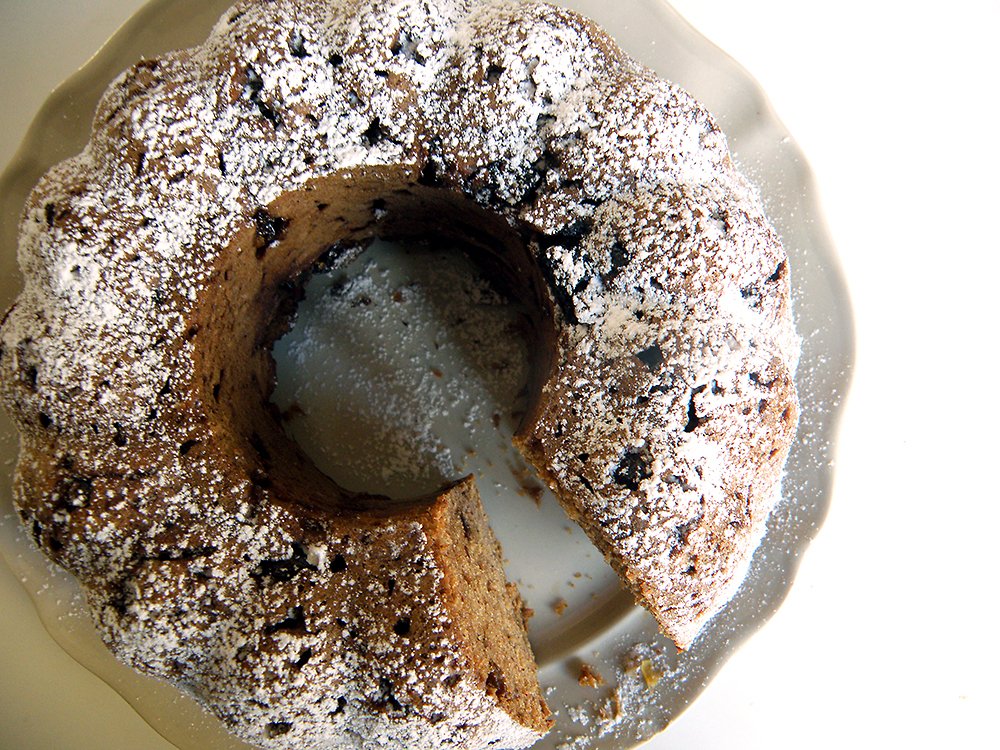
The last one of the four dry cakes I'm posting has several names: spice cake, buttermilk cake, raisin cake or Arabian coffee cake. In the latter case it usually also has an icing featuring margarine, coffee, icing sugar and cinnamon. The spice blend here is very medieval, and foods like that are typically eaten only during December nowadays (as in gingerbread), but somehow this classic has managed to last all year round.

The biggest differences between recipe versions come from that spice blend. The spices themselves stay pretty much the same, but some like to add more cinnamon, some more cardamom and some more clove. I'm used to a bit stronger flavours than most Finns I guess, so my version has a double portion of them all.  There are also strong opinions on whether it should include raisins or not. Decide for yourself!

- 4.5 dl wheat flour
- 3 dl oat or soy yogurt
- 100 g margarine
- 1 dl sugar
- 1 dl raisins (optional)
- 2 tsp ground clove
- 2 tsp ground cinnamon
- 2 tsp ground cardamom
- 2 tsp baking soda

Combine dry ingredients, including raisins if you're using them. Melt the margarine. Mix in the melted margarine and yogurt as well. Pour into a ring-shaped cake mold, which you've greased and breadcrumbed. Bake for about an hour in 175°C.


Nutritional values / 840 g:
energy 2903 kcal
fat 85 g
protein 55 g
carbohydrates 328 g
fiber 19 g

11.9.14

Tiger Cake ‒ Tiikerikakku


http://www.veganmofo.com/
Random facts about Finnish coffee culture #11: Nowadays stores compete over who sells the cheapest coffee, sometimes even under their own purchase price to get us coffee addicts do all of their shopping in the same place. But in the 80's a packet of coffee was still expensive enough to be a popular present item when going for a visit, and that's still more common than bringing say, a wine bottle.


"I'm taking part in this food blogging challenge this month. And so it wouldn't be too easy I took a theme of Finnish coffee table pastries."
"Finnish pastries? What, like tiger cake?"
"Why yes, I some one on the table actually! Care some?"

The conversation above took place on Sunday evening. Before that I asked another friend if he would happen to have a ring mold he could lend me and he asked: "Oh you mean a tiger cake mold?". I think these stories describes beautifully how plain and ordinary this cake is thought to be among younger Finns. Yet there is usually a good reason why some foods become so iconic in the first place that they practically start to bore us.

Though the recipe is as simple as it can get, this time I almost failed the whole thing. I took some model from another recipe, took it out of the oven way too early, tried to turn it onto a plate and got some hot, still runny batter on my hands. Ouch. Miraculously, most of the cake came out just fine after some more time spent in the oven. So in the following recipe I've given you the total baking time I used, which is in line with the three other dry cakes I'm posting this MoFo.

- 4.5 dl wheat flour
- 200 g margarine
- 3 dl sugar
- 1 dl oat or soy milk
- 1 dl apple or orange juice
- 2 tbsp dark cocoa powder
- 2 tsp vanilla sugar
- 2 tsp baking powder

Melt the margarine. Mix the dry ingredients except for the cocoa powder. Add the liquids into the dry ingredients. Divide the batter in two portions, the other one being slightly bigger. Mix the cocoa with the slightly smaller half

Grease a ring mold and apply breadcrumbs too if you wish. Pour some white batter in the, cocoa batter carefully on it and so on. Try to make the white layer the last. Quite often you see version with just one large cocoa stripe, so that's totally acceptable too. Bake in 175°C for about an hour.

Nutritional values / 970 g:
energy 3468 kcal
fat 152 g
protein 45 g
carbohydrates 476 g
fiber 15 g

7.9.14

Mocha Squares ‒ Mokkapalat


http://www.veganmofo.com/Random facts about Finnish coffee culture #7: There is usually milk and sugar available at the coffee table, or on special days cream instead of milk in a smaller jug. People have different but usually relatively permanent habits of whether they want to use these additions or not, and how much, so you don't need to explain yourself. Teenagers often start the habit with as much milk as coffee and several cubes of sugar, whereas drinking the black stuff straight as it is, is thought more like the territory of masculine men.
At the moment one of the most popular forms of cakes are the kinds you can quickly whip together, spread on a whole baking sheet and cut into convenient hand fitting pieces. Mocha squares aka. suklaapelti, chocolate sheet, are one of the hallmarks of this genre and resemble chocolate brownies quite a lot. The peak of their popularity was at the 80's but to this day they are going strong, although with an added retro feel.

People tend to have their own special recipes on how to make the squares. The one my mum used for example, was called Pate's cake, though I never found out who was this mysterious Pate, only that volunteering to make the icing part was my ticket to tasting that black grown-up drink with a lot of sugar and fat. The recipe I've used was originally from Jere Nieminen's book Vegaanin kotiruokakirja, but I've changed it here and there over time, especially the icing part.

The cake:
- 150 g margarine
- 3 dl sugar
- 5 dl wheat flour
- 2.5 dl oat or soy milk
- 4 tbsp cocoa powder
- 2 tbsp vanilla sugar
- 1.5 tbsp apple wine vinegar
- 2 tsp baking soda


The icing:
- 50 g margarine
- 500 g icing sugar
- 4 tbsp strong coffee
- 1 tbsp cocoa powder
- colourful sprinkles straigth from the 80's

Whisk the cake margarine and the sugar until foamy. Add the vinegar and the milk to the bowl. Mix the dry ingredients and add them as well. Mix even. Spread on a baking sheet. Bake about 20 minutes in 200°C.

In the meanwhile, prepare the icing. Whisk the ingredients together, starting from the margarine and the coffee. Don't put everything in at once. Add more coffee if the result seems too sturdy and more icing sugar if too runny. Spread on the cake after it has cooled down a bit. Decorate liberally with sprinkles.

The cake is ready to be cut into squares and eaten after the icing has settled down. A cool place helps with this.

Nutritional values / 1617 g:
energy 5688 kcal
fat 160 g
protein 59 g
carbohydrates 994 g
fiber 25 g

6.9.14

Spoon Biscuits ‒ Lusikkaleivät


http://www.veganmofo.com/Random facts about Finnish coffee culture #6: Much like Italian habit of eating spaghetti with a for and a spoon, his is a habit largely disappeared, but you can still see some older people doing it. They pour their coffee from the cup to the saucer to cool it down. Then they press a sugar cube tightly between their lips and trough it sip the coffee from the saucer.

In my childhood, these biscuits shaped like spoons were a standard standing coffee table piece on every confirmation and  50th birthday party. So I kind of associate them with silverware, linen tablecloth and candles, but there's really no reason why they couldn't be a part of a regular coffee table too. Still, I'd reserve them for special occasions such as Independence Day or name days.

One thing I've wondered is why so many Finnish cakes and biscuits use baking soda though I don't see anything especially sour on the ingredient list. I kind of assumed it's more for the taste, but several sources claim baking soda used in a wrong place makes everything thing taste bitter. Apparently in biscuits it's purpose is to give a light brown colour without raising too much the structure meant to be crunchy. (The following should make about 40 biscuits.)

- 200 g margarine
- 1.5 dl sugar (plus some to decorate)
- 2 tsp vanilla sugar
- 1 tsp baking soda
- 4 dl wheat flour
- 1 dl raspberry marmalade

Heat up the margarine in a sauce kettle. Don't lift it off as soon as it has melted but stir occasionally and continue to cook for about five minutes. When the margarine has toasted just a little, move it into a bowl, add sugar and stir even. Let the mixture cool down.

Mix the dry ingredients together and add them as well. Find an oval and deep shaped teaspoon. Press the dough into the spoon evenly. Draw it carefully out of the mold and onto a baking sheet with the flat side down. Repeat as many times as you have dough left.

Bake 12‒15 minutes in a 175°C oven. Let them cool down. Spread marmalade on the flat side and press another individual against it. Quite often these are also rolled in sugar before serving.

Nutritional values / 1 biscuits / 18 g:
energy 73 kcal
fat 4 g
protein 1 g
carbohydrates 9 g
fiber 0 g

27.12.13

Rutabaga Casserole ‒ Räätikkäloora

Somehow I've managed to forget posting one of the four classic casseroles of the Finnish Christmas table. The others are of course carrot casserole, potato casserole and liver or in my case, raisin casserole. As a replacement of some sort I have remembered rutabaga cubes in syrup though. Nothing wrong with that, but here's the true classic, too. While potato and carrot only became common relatively recently, rutabaga is something you might call original part of the standing table, after all.

- 1 kg rutabaga
- 2 dl oat cream
- 1 tbsp dark syrup
- cinnamon
- clove
- allspice
- breadcrumbs and margarine to top with

Peel and cube the rutabagas. Steam them soft. Mash smooth and mix together with the cream and the spices. Spread in a casserole and finalize by sprinkling breadcrumbs and margarine pieces. Bake for an hour in a 175°C oven.

Nutritional values / 1283 g:
energy 849 kcal
fat 45 g
protein 16 g
carbohydrates 96 g
fiber 21 g

25.12.13

Yule Stars ‒ Joulutortut


Yule stars or Christmas tarts are one of those things every Finn gets fed up during December. I tried to search the origin of them, but it turned out surprisingly difficult. Some writers say they originated in England which is funny because I haven't heard these would be known outside Finland. I assume we're talking about some tarts resembling them but not exactly like them. The first written recipe we know is by a Swedish cook Cajsa Warg in her book Hjelpreda i hushållningen för unga fruentimber, printed in 1755, but for my knowledge, Swedes of today don't know them either. Anyway, judging from the ingredients alone, these are probably one of those things that became popular in the 19th century among noblemen and which regular folk just couldn't even dream to afford.

This year there was a small public outrage when the public broadcasting company of Sweden (the country which Finns have a very complicated love-hate relationship with) claimed them swastikas. Nothing wrong with Sun symbols during the biggest Sun festive of course, but unfortunately it was more like Nazi symbols. This of course assured their popularity among younger Finns with a bad sense of humour like me. In our this years solstice bring-dish party there was little else than Yule starts to eat.

At least that gave me a change to compare self-made tarts and those with store-bought dough. The store-bought ones win in flakiness and fluffiness but of course, lose miserably in taste category. Making the dough yourself does take a little work though, so it's understandable why modern Finns most often cut corners here. The key words to success are coldness and layers. My personal secret ingredient is booze which boils away in the oven, leaving things crunchier than plain old water. It's not essential but if you don't want the extra taste, you can use good quality, odorless vodka.

- 1 l wheat flour
- 500 g margarine
- about 2 dl cold water
(- 2 tbsp brandy or vodka)

- 300 g plum jam (or apple marmalade)

Measure the flour into a large bowl. Place the margarine on it, cold. Start chopping the margarine with a knife until the pieces are about the size of a pea. Drizzle the brandy on the crumble as well as about 1 dl of cold water. Mix with a spatula. Keep adding water a spoonful at a time until you manage to get it mixed. Even quickly by hand and move the resulting clump into a cold place for half an hour.

Place the dough on parchment paper. Roll it flat and thin. Fold one third from the left on the centre and one third from the right on the centre. You should now have a three-layered dough. Turn it 45 degrees an roll again. Repeat this process a few times. Move into a cold place for half an hour.

Now roll the dough one more time and cut into squares. If you're going for the traditional star shape, make cuts from all corners towards the middle. Portion a good spoonful of jam on the middle. Fold the left side of each corner in the middle. Press a little so they won't open up in the oven. If you're afraid your so-called friends will mistake you for a neonazi, try a flower shape instead. I got three baking shields or 27 stars from this amount.

Bake in 225 °C until the edges start to acquire some colour ‒ that's about ten minutes. For a "snowy" effect, dust with powdered sugar.

Nutritional values / 1 star / 50 g:
energy 203 kcal
fat 14 g
protein 3 g
carbohydrates 16 g
fiber 1 g

2.8.13

80's Salad with Horseradish Mayonnaise ‒ Kasarisalaatti piparjuurimajoneesilla


Continuing my perversion of dishes from the luckily bygone 80's, pasta salads are a must. The classic version features a certain bag of frozen vegetables abbreviated HMP, herne-maissi-paprika or pea, corn and bell pepper. There is also ham, mayonnaise and macaroni, or in a flashier version tricolour pasta. I thought I'd modernize it by improving every part of it a little, using fresh ingredients we now enjoy during summertime.

Now, I've had my share of failures when trying to make mayonnaise myself. Usually I just got soy milk with added features. The Youtube videos I tried to watch mostly left out the actual part where the ingredients are mixed together. Then I managed to bump into this instruction and had to laugh out loud when it worked so easily for me. The only important parts are the lemon juice and the oil, the rest is just up to your personal taste. And I'm pretty sure you could use vinegar instead of lemon juice, as well as experiment with different vegetable oils.

The salad
- 250 g funny-looking wholemeal pasta
- 200 g extra firm smoked tofu
- 5 dl pea pods
- 2 pre-cooked corn ears (grilling does wonders if that's an option)
- 2 red bell peppers

The mayonnaise
- lemon juice (about 2 tbsp)
- 2 dl rape oil (not cold pressed but the neutral type)
- 2 tsp mustard
- 2 tbsp grated horseradish
- salt
- white pepper

Cook the pasta and in salted water. While it's cooking, separate the peas from their pods, chop the bell peppers and take out the edible parts of the corn with a help of a knife. Cut the tofu into long thin pieces. When the pasta is ready, drain it and mix everything in a bowl.

For the mayonnaise, you'll need a hand-held immersion blender and a jar just the size of it. First, pour enough lemon juice to cover the bottom of the jar. Stick the blender firmly on the bottom and pour the oil on it. Start the blender and pull it out sloooowly. Now the mayonnaise should be firm and you can mix the spices in it. Serve as a salad dressing or mix about 0.5 dl of it right into the salad and put the rest into fridge for later purposes.

Nutritional values / 1415 g:
energy 1807 kcal
fat 43 g
protein 90 g
carbohydrates 258 g
fiber 39 g

11.7.13

Soy Kebakkos ‒ Soijakebakot


I always thought kebakkos are about as boring as food can get, but actually they're an interesting example of fusion kitchen. Guess this only proves how blind you can get for things common in your own culture. Somehow it should've been oblivious as the name already is a combination of Finnish and Turkish. The Finnish word kepakko means a stick. The Turkish word kebab apparently in English-speaking world usually refers to meat in a skewer, in Turkey to any kind of meat prepared over or next to a living fire and in Finland has come to mean certain type of spicy meat dish cut from a large skewer into strips.

Kebakkos became a popular dish somewhere in the 80's in the same time when Turkish immigrants and their restaurants started to appear in Finnish city environment. They are nowadays sold as a convenience food and at least in my childhood were served at school meals. The dish combines Turkish kebab with Finnish meatloaf. The stick makes them easy to dip and they also fit with such typical Finnish sidekicks as mashed potatoes. I find them an ideal food to warm up in grill or on the flames of a campfire.

- 400 g tomato sauce
- 4 dl soy crumble
- 1 large potato
- water (about 1 dl)
- 1 onion
- 1 dl bread crumble
- 0.5 dl rape oil
- 0.5 dl soy sauce
- your favourite chili sauce
- (smoked) paprika
- marjoram
- black pepper

Cook and mash the potato. Mince and sauté the onion. Mix all the ingredients together. Add water enough to get a structure that feels easy to mold.

Between your hands or with a help of a baking sheet, roll into bars. Place into sticks. Cook in a 200°C oven for about 20-30 minutes or until the surface looks good. If you're going to barbeque them up in a grill later, oil the surface before that so they won't dry up. With my experience of grills, I'd recoomend precooking in the oven anyway.

This could be served with just salad and a good dip sauce, but this time we had it with cauliflower purée.

Nutritional values / 990 g:
energy 1280 kcal
fat 69 g
protein 62 g
carbohydrates 103 g
fiber 26 g

29.5.13

Rhubarb Tart with White Chocolate ‒ Valkosuklaa-raparperipiirakka


I'm now going to post something that probably hundreds of other food bloggers are posting within a week. This is the rhubarb season, and the most classic thing to make from the excess of rhubarbs so many people seem to get from their garden is a tart or pie. Sometimes I wish this wonderfully sour plant would get to be used a bit more creatively, but then again, classics are usually classics for a reason. This year I tried to find some variation to the classic by combining the sourness of rhubarb to the rounded taste of white chocolate, which complements it just wonderfully especially when still a bit melted.

This base fits into many types of pies and tarts so if you want to variate it, try adding cocoa powder or replacing some of the flour with something crunchier like rye flour.

Basic shortcrust pastry:
- 150 g margarine
- 4 dl wheat flour
- 3 tbsp sugar
- 0.5 dl cold water
- 1 tsp baking powder

Filling:
- 5 rhubarb stalks
- 200 g white chocolate (milk-free white chocolates seem to have huge differences so taste before deciding which one to use)
- 5 dl soy yogurt (or oat)
- 3 tbsp sugar
- 1 tbsp vanilla sugar
- mint

Pick the sugar and the margarine together between your fingers. Add the flour, mixed with the baking powder. Keep picking until you have a bowl full of crumby mixture. Knead it together with the water to acquire a paste. Move in the fridge for a while.

While the dough is cooling down, prepare the filling. Chop the rhubarb and sprinkle with vanilla sugar. Either chop the chocolate into flakes with a knife or use a blender. Mix with the yogurt and the sugar. Spice with dried mint.

Spread the dough into your mold. Cover with rhubarb pieces. Cover the rhubarb pieces with the yogurt mixture. The idea here is to leave the rhubarb deliciously sour but place it between two sweet layers.

Bake in a 200°C oven for 45 minutes or until the yogurt has coagulated and perhaps even got some colour. If you want the structure to hold together better, you'll need the patience of an elephant: let it cool down well, perhaps even spend the night in the fridge before serving.

Nutritional values / 1890 g:
energy 3771 kcal
fat 126 g
protein 64 g
carbohydrates 341 g
fiber 25 g

4.5.13

Wiener Rolls ‒ Nakkipiilot


I was born in a completely different world than where I now live. It's not just in the 80's there was no WWW or mobile phones, no one cared whether the environment was being destroyed or not and people lived in constant fear of nuclear war that would destroy the whole planet. Also, Finland was much poorer, closed and conservative place back then. You couldn't import vegetables that were cultivated domestically, which basically means there was no watery Spanish tomatoes during winter. No one had heard of mangos either, and wild veggies were something you wouldn't feed even to your pet rabbit. Perhaps this already explains why there was no vegetarian restaurants either.

Though I wouldn't want to return to that time when I wore diapers, I still have this weird nostalgic affair with 80's recipes which sound just as awful as the clothes they wore back then. These once so popular party snacks are called Wiener Hideouts in Finnish. And yes, that sounds just as suggstive as it does in English. Someday I should really try to make the basic flaky pastry myself, but right now the store-bought just felt too cheap, easy to find and nearly always vegan.

- 250 g flaky pastry (or puff pastry)
- 1 package of gluten-based teeny-weeny sausages (they're called prinssinakit or prince wieners in Finnish)
- 0.5 dl ketchup
- oregano

Roll and cut the pastry into as many squares as you have wieners. Apply spices if you wish. Place the wiener in the middle and close the pastry around it. Place it on a baking sheet with the seam side down. Cook 10‒15 minutes in a 225°C oven.

Nutritional values / 460 g:
energy 1363 kcal
fat 85 g
protein 73 g
carbohydrates 74 g
fiber 4 g

23.4.13

Pearl Gruel ‒ Helmiryynivelli


Free school lunches have shaped Finnish food culture since 1948. It tends to give whole generations equal experiences and helps especially the lifes of the poorest families. The cooks actually spend a lot of time planning the menus so for many kids this is the healthiest and most nutritionally sound meal they'll eat all day ‒ something that isn't always as self-evident as you'd like to think.

Every generation also seems to have strong favourites and anti favourites.School food is generally criticised as lacking of taste, in the same way as say, hospital food, but the environment of hurry and lack of aesthetics also gathers critique. Sometimes I've thought you could put together an interesting cook book just by collecting together most hated school foods from different times. I grew up during the depression of the 90's in the Finnish version of Bible Belt, Ostrobothnia, and was one of the only three vegetarian students, so I still have a hard time eating square-shaped dry bread, grated root vegetables or raw cabbage ‒ what an excellent salad projet for the next winter. (Then again, I loved pea soup and spinach pancakes.)

For the generation of my parents, pearl porridge and pearl soup were definitely among the most hard-to-swallow items. And can't blame them, I mean gosh, those things are slimy. They're just potato starch pressed together, something I imagine didn't exist before second world war.

I, on the other hand, came to like pearl soup since it was something my grandmom used to make. Come to think of it, it doesn't actually differ much from the macaroni soup my dad made, so if you have a hard time finding "pearls", try macaronis instead. It might prove difficult since I haven't heard they would be used anywhere else in the world (although this might help). This version gets a bit more taste from fennel seeds and that medieval treat, almond milk, which is usually sold lightly sweetened so I omitted sugar altogether though in my records this is definitely a dish on the more sweet side.

- 1 l almond milk (you can choose any milk you like, I just thought this would give a nice aroma)
- 1.5 dl potato starch pearls
- 1 tbsp fennel seeds
- 1 tbsp margarine
- salt
- sugar to serve

Heat up the milk. (Don't leave it alone as it might come out from the pot if it misses you.) When you start to see bubbles appearing, add the pearls and the fennel seeds. Let them cook for about 8 minutes. Add a pinch of salt and if you wish, a spoonful of margarine. Let the eaters decide if they want to sprinkle sugar on top.

Nutritional values / 1090 g:
energy 611 kcal
fat 22 g
protein 5 g
carbohydrates 306 g
fiber 16 g

2.1.11

Rutabaga Cubes in Syrup ‒ Siirappiset lanttukuutiot

Instead of rutabaga casserole I made what my mum used to cook on Yule. Simple fried rutabaga cubes with syrup. The basic idea was to re-fry them every day as long as there was something left. They just got softer and better each time. But it didn't work like that now. Almost all of them were gone after the first meal and then I ate the remains cold next day when I got hungry,

- 1 kg rutabagas
- 2 tablespoons dark syrup
- 1 tablespoon rape oil
- salt

Peel the rutabagas and cube them. Fry on a hot pan with oil. Season with syrup and a pinch of salt.

Nutritional values / 1054 g:
energy 490 kcal
fat 17 g
protein 10 g
carbohydrates 76 g
fiber 18 g

10.7.10

Summer Soup ‒ Kesäkeitto

Kesäkeitto, literally 'summer soup', is a dish that all Finns have strong childhood memories about. For me it reminds me of my mum and careless, sunny days. For others it brings in mind school canteen and sadistic teachers forcing them to eat the stuff with tears in their eyes. But if you've never even heard about this soup before, consider yourself lucky: you'll get to base your opinion purely on it's humble taste. Here's how I prepare it:

- 2 l water
- 500 g new potatoes
- 1/4 cauliflower
- 2 carrots
- 1 dl fresh peas
- 3 beanstalks
- 2 dl soy cream (oat cream is probably fine as well)
- salt
- whole black peppers

Wash the potatoes well and remove the bad parts but don't bother to peel. Let them simmer in salty water until soft. Chop the veggies and add everything into the pot. The soup is ready when the carrots are - in less than ten minutes.

Garnish with fresh herbs.

Nutritional values / 3080 g:
energy 831 kcal
fat 36 g
protein 20 g
carbohydrates 98 g
fiber 16 g

7.5.10

White Sauce ‒ Valkokastike

When writing about the brown sauce I promised to tell you later about the other mother sauce my mum makes, the white sauce. Just like the brown one, this is really simple but can be used as a base for many other sauces. While I tend to associate the brown sauce with winter, the white one is much more summery. It crowns many of those seasonal delights of springtime: new potatoes, asparagus, fireweed and dandelion leaves or artichoke but can also be used for seitan steaks or in lasagna. French cuisine calls it béchamel.

- 3 tablespoons wheat flour
- 2 tablespoons margarine (of good quality!)
- 5 dl soy milk (I find this works better than oat milk but that's naturally only a matter of taste)
- white pepper
- herb salt

Melt the margarine in a sauce pot. Sift in the flour, stirring all the time so it won't get clumpy. Add the milk as a thin strip, stirring all the time. Spice up. The sauce is ready after it has thickened up.

For asparagus and dandelion I like to add some mayonnaise and a teaspoon of vinegar. Dill, garlic and blue-type soy cheese also fit here just perfectly.

Nutritional values / 5 dl:
energy 469 kcal
fat 32 g
protein 24 g
carbohydrates 25 g
fiber 1 g

7.4.10

Viili

The most discussed cook book over the last few years has most certainly been Natural Harvest - quite an interesting phenomena to anyone even slightly interested in cultural taboos. Semen and this viili I just made have at least two things in common. The oblivious one is the way they look. The second one is that strictly speaking, neither one is a vegan ingredient. But as I found out, viili could be.

Viili is a fermented milk product popular around Scandinavia and probably my personal favourite. Compared to yogurt it's rather sour and has a structure much more ropy (here's a demonstration). It can be eaten as such or with jam, talkkuna or ryecrisp pieces. I've never seen it sold vegan but it turned out just as easy to prepare with vegetable milks as it is with cow milk. Micro organisms usually aren't too picky.

You need couple of spoonfuls from an older viili batch to get the bacteria. This is most easily done by buying a jar of non-vegan viili, unless you have a chance to come and get some straight from me. Then you just need to fill the cup with milk, mix it a bit and leave uncovered on some warm place overnight. Next day you can refrigerate the cup. It takes a few more days for the taste to evolve right. Check now and then to find your preferred intensity.

The front cup in the photo with the velvety fungus surface is made out of soy milk. I used a sweetened brand but the basic taste was quickly run over by the characteristic taste of viili. The oat version didn't look as adorable but I actually preferred its taste. Oat milk is usually much thinner, forms some watery spots and takes longer to mature so I used a dollop of oat cream in it as well. The result can be seen in the background.

21.2.10

Brown Sauce ‒ Ruskiakastike

You know how French kitchen has four mother sauces that all the rest are based on? Well, my mother has just two: the brown sauce and the white sauce. This time I'll concentrate only on the brown one and save the white one for early summer and new potatoes.

English speaking world uses that wonderful term comfort food. Basic roux-based sauce with potatoes is certainly one of those for me. It's really simple in principle but it took me quite many years to learn how to properly prepare it. It got burnt, it got clumpy, it got watery. The key thing is knowing when to add the water. The flour should be roasted but not burnt. My mum, a child of the post-war shortage years, has learned to replace butter with good quality margarine but I've taken the progress even a step further. Oil seems to work just as well and you don't need it quite as much.

- 2 tablespoons sunflower oil
- wheat flour (about 4 tablespoons)
- 4 dl water
- salt

Heat the oil in a sauce pan. Sift in the flour, in small batches. Keep stirring the bubbling mixture until it has acquired a beautiful colour. Add the water, again in small batches, stirring all the time. Season with salt. Let the sauce thicken up before removing it from the stove.

You can cultivate the sauce for example with mustard, onion and sausage slices. Tomato puree, oat cream and paprika make another yummy combination. Add red wine and herbs instead of water and you've just made yourself the best red wine sauce there is. And it's nearly always a good idea to pour a dollop of stock into any of them.

Nutritional values / 467 g:
energy 379 kcal
fat 28 g
protein 5 g
carbohydrates 27 g
fiber 2 g

17.2.10

Talkkuna Ropsu ‒ Talkkunaropsu

A must have dessert after pea soup is ropsu. I use the South-Ostrobothnian name but most Finnish speakers call it with the word pannukakku which has the same origin as English word pancake. They have many things in common but this Finnish dish is thicker, bigger and cooked in the oven.

There are huge differences in ropsu recipes and I guess everyone just has to find their favourite through trial and error. This one gets extra flavour from talkkuna and cardamom as well as extra structure from oatmeal, yogurt and baking powder. I also use much lower temperature and less sweetening than most recipes I've seen. Actually, if I'm going to eat it with something overly sweet like jam I only use about 1 tablespoon. Most recipes use eggs which make the ropsu bubble unlike eggless versions ‒ some think it aesthetically pleasing and some are desperately trying to get rid of the phenomena.

This is easily turned into a salty version by dropping the sweetening altogether and adding some herbs like basil and marjoram. Or you might want to try other flavourings, say banana and cocoa powder.

- 1 l soy milk
- 4 dl spelt flour (or dark wheat flour)
- 1 dl talkkuna (can be replaced with more wheat flour)
- 1 dl oatmeal
- 1 dl soy yogurt
- 0.5 dl dark syrup (or sugar)
- 1 teaspoon baking powder
- cardamom (or some vanilla)
- salt (just a pinch)
- 3 tablespoons margarine

Mix together the dry ingredients. Add the milk, the yogurt and the syrup. Whip whip whip. Let the batter rest for half an hour.

Warm up your oven to 175°C. Take a baking tray. (I've seen photos on the internet where people have tried to make these in a frying pan or some smallish casserole so let me stress this: you'll need a whole baking tray plus a sheet of parchment paper. If you only have a pan then make a smaller portion.) Put half of the margarine on it and stick it into the oven. When the tray has warmed up, take it out, spread the melted margarine evenly and pour the batter on it.

Cook your ropsu for half an hour on a low shelf. Take it out for a moment, top with margarine pieces and put on the top shelf for another fifteen minutes to get some colour. If you try the ropsu with a wooden stick at this point it should still feel sticky from the inside. Let it cool down before serving.

The classic sidekicks are strawberry jam and whipped cream. Instead of going to a food store just for oat cream I made a thick mousse from chocolate, fruity beer, half-frozen silken tofu, sugar and frozen berries. Part of the berries I just added on top. Voilá!

Nutritional values / 1555 g:
energy 2295 kcal
fat 55 g
protein 55 g
carbohydrates 339 g
fiber 34 g
Osta neljä tuotetta ja maksat vain kolmesta - Luomutallin kampanjatuotteet näet täältä


Teekauppa.fi - laadukasta teetä netistä
Ostoskorin loppusummasta vähennetään viisi euroa ja toimitus tapahtuu ilman postikuluja.
Syötä ostoskoriin kuponkikoodi:

syysteet

Tilauksen on oltava vähintään 35 eur, mistä jää maksettavaksi 30 eur.
Related Posts Plugin for WordPress, Blogger...