12.9.14

Spice Cake ‒ Maustekakku


http://www.veganmofo.com/
Random facts about Finnish coffee culture #12: Coffee came to Europe through Arabs. Although the biggest producers in the modern world are Brazil and Vietnam, in Finland the association to Arabs is still live and well. Camel caravans are pictured in coffee packets, the most famous cup factory is called Arabia and coffee spiced with cinnamon, cardamom and ginger is labeled Arabian coffee.

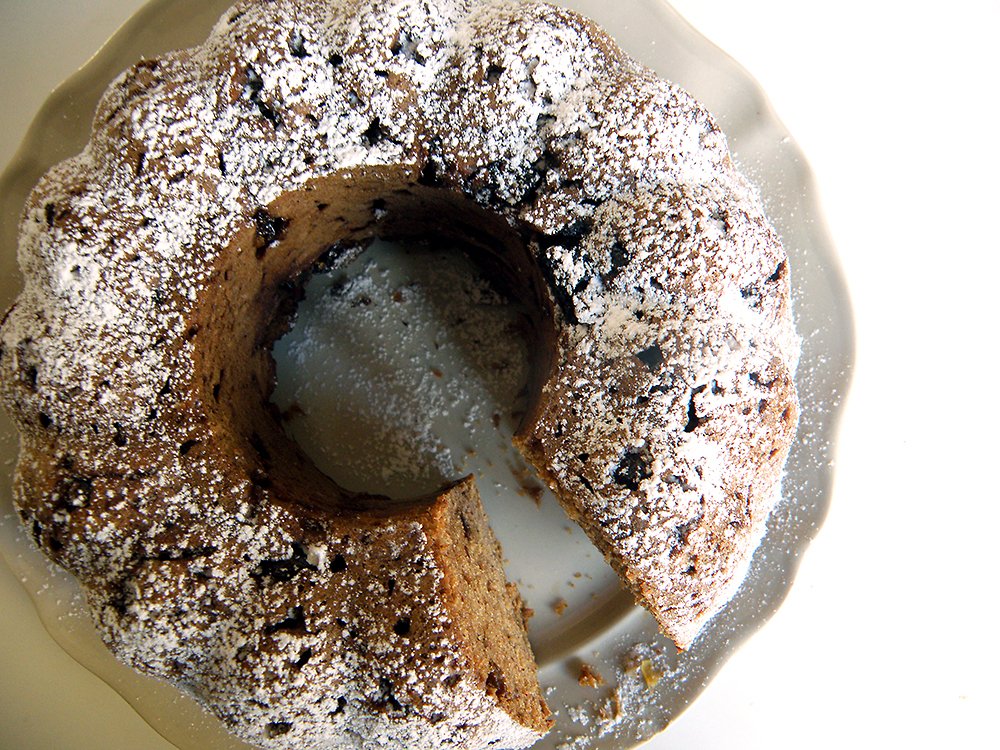
The last one of the four dry cakes I'm posting has several names: spice cake, buttermilk cake, raisin cake or Arabian coffee cake. In the latter case it usually also has an icing featuring margarine, coffee, icing sugar and cinnamon. The spice blend here is very medieval, and foods like that are typically eaten only during December nowadays (as in gingerbread), but somehow this classic has managed to last all year round.

The biggest differences between recipe versions come from that spice blend. The spices themselves stay pretty much the same, but some like to add more cinnamon, some more cardamom and some more clove. I'm used to a bit stronger flavours than most Finns I guess, so my version has a double portion of them all.  There are also strong opinions on whether it should include raisins or not. Decide for yourself!

- 4.5 dl wheat flour
- 3 dl oat or soy yogurt
- 100 g margarine
- 1 dl sugar
- 1 dl raisins (optional)
- 2 tsp ground clove
- 2 tsp ground cinnamon
- 2 tsp ground cardamom
- 2 tsp baking soda

Combine dry ingredients, including raisins if you're using them. Melt the margarine. Mix in the melted margarine and yogurt as well. Pour into a ring-shaped cake mold, which you've greased and breadcrumbed. Bake for about an hour in 175°C.


Nutritional values / 840 g:
energy 2903 kcal
fat 85 g
protein 55 g
carbohydrates 328 g
fiber 19 g

11.9.14

Tiger Cake ‒ Tiikerikakku


http://www.veganmofo.com/
Random facts about Finnish coffee culture #11: Nowadays stores compete over who sells the cheapest coffee, sometimes even under their own purchase price to get us coffee addicts do all of their shopping in the same place. But in the 80's a packet of coffee was still expensive enough to be a popular present item when going for a visit, and that's still more common than bringing say, a wine bottle.


"I'm taking part in this food blogging challenge this month. And so it wouldn't be too easy I took a theme of Finnish coffee table pastries."
"Finnish pastries? What, like tiger cake?"
"Why yes, I some one on the table actually! Care some?"

The conversation above took place on Sunday evening. Before that I asked another friend if he would happen to have a ring mold he could lend me and he asked: "Oh you mean a tiger cake mold?". I think these stories describes beautifully how plain and ordinary this cake is thought to be among younger Finns. Yet there is usually a good reason why some foods become so iconic in the first place that they practically start to bore us.

Though the recipe is as simple as it can get, this time I almost failed the whole thing. I took some model from another recipe, took it out of the oven way too early, tried to turn it onto a plate and got some hot, still runny batter on my hands. Ouch. Miraculously, most of the cake came out just fine after some more time spent in the oven. So in the following recipe I've given you the total baking time I used, which is in line with the three other dry cakes I'm posting this MoFo.

- 4.5 dl wheat flour
- 200 g margarine
- 3 dl sugar
- 1 dl oat or soy milk
- 1 dl apple or orange juice
- 2 tbsp dark cocoa powder
- 2 tsp vanilla sugar
- 2 tsp baking powder

Melt the margarine. Mix the dry ingredients except for the cocoa powder. Add the liquids into the dry ingredients. Divide the batter in two portions, the other one being slightly bigger. Mix the cocoa with the slightly smaller half

Grease a ring mold and apply breadcrumbs too if you wish. Pour some white batter in the, cocoa batter carefully on it and so on. Try to make the white layer the last. Quite often you see version with just one large cocoa stripe, so that's totally acceptable too. Bake in 175°C for about an hour.

Nutritional values / 970 g:
energy 3468 kcal
fat 152 g
protein 45 g
carbohydrates 476 g
fiber 15 g

10.9.14

Maria Lönnrot's Cake ‒ Maria Lönnrotin kakku


http://www.veganmofo.com/
Random facts about Finnish coffee culture #10: During the Swedish govern (and again during the second world war) coffee was on prohibition several times. It was an expensive import product,  which was totally unacceptable in the mercantilist ideology of the time, plus it was thought to have negative effects on public health. The smell of forbidden fruit of course only made coffee even more desired and also a profitable target for smugglers. Since Finns aren't easily convinced so they later repeated the prohibition experiment with alcohol and nowadays cannabis, with similar effects.

In the 20th century there were (and still are) a lot of rivaling lemon cake recipes. This one is from Maria Piponius aka. Maria Lönnrot, the wife of Elias lönnrot best known for compiling our national epic Kalevala. The recipe doesn't call for any special veganizing, just adding the word soy in front of cream. Since lemons weren't always readily available, it gives the option of using cardamom instead, but because I'm weird I like adding them both simultaneously. Here is by the way a video of grandma Leena baking this very cake, plus on the same site many other grandams from Finland, Belgium, Netherlands, Italia and Turkey baking their traditional recipes. Yay for grandmas!

Notice the cups here don't mean cups of the English speaking world but Finnish coffee cups of the time. Somewhere between 1,25-1,5 dl is usually a close enough estimation, as long as you stay coherent. As for the soda, I suspect the cream of the time was the sour part of the recipe and vegetable-based cream necessarily isn't, so just to be on the safe side I add some lemon juice as well. The recipe contains well enough sugar to cover that.


- 3 coffee cups whippable soy cream
- 2 coffee cups sugar
- 4 coffee cups wheat flour
- 1 tsp baking soda
- 1 grated lemon rind or 1 tsp cardamom (plus half the lemon juice)

Whisk the cream and the sugar until foamy. Add the rest of the ingredients. Pour into a greased cake mold. (You can sugar the mold after greasing if you wish, but don't use breadcrumbs.) Bake in 175°C for an hour or so. Turn out onto a plate when hot.

Enjoy the aromatic creaminess with coffee and good company.

Nutritional values / 1145 g:
energy 3512 kcal
fat 99 g
protein 54 g
carbohydrates 593 g
fiber 17 g 

9.9.14

Devil's Cake ‒ Paholaisenkakku


http://www.veganmofo.com/
Random facts about Finnish coffee culture #9: Usually, there are two rounds of coffee. The second serving is characterized with the same modesty than going to the table (see fact #2). The guest may try to deter when the hostess comes to pour the second cup. The hostess then persuades the guest who perhaps tries to further present reasons not to until he or she agrees to have a half cup. The hostess then pours a full cup. In case your tummy really can't take the second, it's better you choose to have tea to begin with.


Couple of last day's posting have contained cocoa, so it's time to give you the ultimate in that regard. Devil's is sometimes also referred to as cake of a broken heart. Perhaps the name comos from the blackness, or the fact how chocolate has often been redeemed hedonist and sinful.

This is a classic among a cake type called dry cakes, coffee cakes or one-hand cakes because they're so fast and easy you can make them with your left hand only. They were among the earliest thing to be served with coffee, starting from mansions of 17th century. When the coffee drinkin habit became more frequent, the cakes were left out for special occasions.

Most Finns think these are tooo common, which means they aren't on the peak of their popularity at the moment. Now that I tried making a few I was surprised on how easy it was to achieve a great structure. Somehow none of my bakings have been dry like I remembered, on the contrary. They are called dry cakes since they don't usually require any topping, though melted chocolate does fit this one perfectly.

Eggs are a common ingredient, though it's usually pretty safe to just leave them out. They may become more crumbly but since they're crumbly anyways, the difference isn't huge. Here I replaced 2 eggs and 1 dl wheat flour with 1 dl potato starch and 0.5 dl worth of extra milk.

- 200 g margarine
- 4 dl wheat flour
- 3 dl sugar
- 2.5 dl soy milk
- 1.5 dl dark cocoa powder (no, this isn't meant to read tablespoon)
- 1 dl potato starch
- 2 tsp vanilla sugar
- 2 tsp baking soda
- 1 tsp salt

Mix everything even. Pour into a buttered ring mold. Bake in 175°C for about an hour.

Nutritional values / 1110 g:
energy 3774 kcal
fat 164 g
protein 56 g
carbohydrates 508 g
fiber 29 g 

8.9.14

Coconut Balls ‒ Kookospallot


http://www.veganmofo.com/Random facts about Finnish coffee culture #8: Routinely offering coffee to guests started to increase popularity in the 19th century, thanks to very influential temperance movement. At the time, coffee was still an expensive import product. Before that guests were shown hospitality with a spirits toast, which on the contrary was cheap since every house distilled their own moonshine. Nowadays this price ratio has turned upside down, but islanders of the west coast (who typically speak Swedish) have kept the toast version all along.
I'm sorry all raw eaters, low-carbs and coeliacs, but this might be the only recipe I have for you this month. Finnish coffeee table is generally almost hostile towards you. (One might say something similar about vegans too, but they might find at least a biscuit they can nibble.) These cute little balls actually originated in Sweden too. As with mocha squares, there's something really 80's in them. Nowadays they're popular among kids learning to bake and of course, hippies.

Here are two versions. The first one is the more 80's version, the alternative more raw friendly. In case you want to minimize the total amount of carbs and not just watch they come from healthy sources, forget the dates altogether or replace with a sweetener of your choice, for example stevia powder.

- 2 dl coconut flakes
- 2 dl rolled oats (or more coconut flakes)
- 75 g margarine (or coconut oil)
- 0.5 dl sugar (or dried and soaked dates)
- 2 tbsp cocoa powder
- 2 tbsp cold coffee (or soaking water from the dates)
- vanilla powder
- additional coconut flakes for decoration

If you're using dates, first soak and puré them. Otherwise you can just rub everything together with your hands. Take little pieces of the mixture and roll them into ball between your hands. Roll in coconut flakes and place on the serving plate.

Nutritional values / 308 g:
energy 1415 kcal
fat 105 g
protein 19 g
carbohydrates 93 g
fiber 23 g

7.9.14

Mocha Squares ‒ Mokkapalat


http://www.veganmofo.com/Random facts about Finnish coffee culture #7: There is usually milk and sugar available at the coffee table, or on special days cream instead of milk in a smaller jug. People have different but usually relatively permanent habits of whether they want to use these additions or not, and how much, so you don't need to explain yourself. Teenagers often start the habit with as much milk as coffee and several cubes of sugar, whereas drinking the black stuff straight as it is, is thought more like the territory of masculine men.
At the moment one of the most popular forms of cakes are the kinds you can quickly whip together, spread on a whole baking sheet and cut into convenient hand fitting pieces. Mocha squares aka. suklaapelti, chocolate sheet, are one of the hallmarks of this genre and resemble chocolate brownies quite a lot. The peak of their popularity was at the 80's but to this day they are going strong, although with an added retro feel.

People tend to have their own special recipes on how to make the squares. The one my mum used for example, was called Pate's cake, though I never found out who was this mysterious Pate, only that volunteering to make the icing part was my ticket to tasting that black grown-up drink with a lot of sugar and fat. The recipe I've used was originally from Jere Nieminen's book Vegaanin kotiruokakirja, but I've changed it here and there over time, especially the icing part.

The cake:
- 150 g margarine
- 3 dl sugar
- 5 dl wheat flour
- 2.5 dl oat or soy milk
- 4 tbsp cocoa powder
- 2 tbsp vanilla sugar
- 1.5 tbsp apple wine vinegar
- 2 tsp baking soda


The icing:
- 50 g margarine
- 500 g icing sugar
- 4 tbsp strong coffee
- 1 tbsp cocoa powder
- colourful sprinkles straigth from the 80's

Whisk the cake margarine and the sugar until foamy. Add the vinegar and the milk to the bowl. Mix the dry ingredients and add them as well. Mix even. Spread on a baking sheet. Bake about 20 minutes in 200°C.

In the meanwhile, prepare the icing. Whisk the ingredients together, starting from the margarine and the coffee. Don't put everything in at once. Add more coffee if the result seems too sturdy and more icing sugar if too runny. Spread on the cake after it has cooled down a bit. Decorate liberally with sprinkles.

The cake is ready to be cut into squares and eaten after the icing has settled down. A cool place helps with this.

Nutritional values / 1617 g:
energy 5688 kcal
fat 160 g
protein 59 g
carbohydrates 994 g
fiber 25 g

6.9.14

Spoon Biscuits ‒ Lusikkaleivät


http://www.veganmofo.com/Random facts about Finnish coffee culture #6: Much like Italian habit of eating spaghetti with a for and a spoon, his is a habit largely disappeared, but you can still see some older people doing it. They pour their coffee from the cup to the saucer to cool it down. Then they press a sugar cube tightly between their lips and trough it sip the coffee from the saucer.

In my childhood, these biscuits shaped like spoons were a standard standing coffee table piece on every confirmation and  50th birthday party. So I kind of associate them with silverware, linen tablecloth and candles, but there's really no reason why they couldn't be a part of a regular coffee table too. Still, I'd reserve them for special occasions such as Independence Day or name days.

One thing I've wondered is why so many Finnish cakes and biscuits use baking soda though I don't see anything especially sour on the ingredient list. I kind of assumed it's more for the taste, but several sources claim baking soda used in a wrong place makes everything thing taste bitter. Apparently in biscuits it's purpose is to give a light brown colour without raising too much the structure meant to be crunchy. (The following should make about 40 biscuits.)

- 200 g margarine
- 1.5 dl sugar (plus some to decorate)
- 2 tsp vanilla sugar
- 1 tsp baking soda
- 4 dl wheat flour
- 1 dl raspberry marmalade

Heat up the margarine in a sauce kettle. Don't lift it off as soon as it has melted but stir occasionally and continue to cook for about five minutes. When the margarine has toasted just a little, move it into a bowl, add sugar and stir even. Let the mixture cool down.

Mix the dry ingredients together and add them as well. Find an oval and deep shaped teaspoon. Press the dough into the spoon evenly. Draw it carefully out of the mold and onto a baking sheet with the flat side down. Repeat as many times as you have dough left.

Bake 12‒15 minutes in a 175°C oven. Let them cool down. Spread marmalade on the flat side and press another individual against it. Quite often these are also rolled in sugar before serving.

Nutritional values / 1 biscuits / 18 g:
energy 73 kcal
fat 4 g
protein 1 g
carbohydrates 9 g
fiber 0 g
Osta neljä tuotetta ja maksat vain kolmesta - Luomutallin kampanjatuotteet näet täältä


Teekauppa.fi - laadukasta teetä netistä
Ostoskorin loppusummasta vähennetään viisi euroa ja toimitus tapahtuu ilman postikuluja.
Syötä ostoskoriin kuponkikoodi:

syysteet

Tilauksen on oltava vähintään 35 eur, mistä jää maksettavaksi 30 eur.
Related Posts Plugin for WordPress, Blogger...